We get asked this one at the kerb all the time. A homeowner is standing in the driveway, squinting up at the roof, trying to work out whether the tiles are worth restoring or whether it is time to think bigger. Half the time they are not even sure what their tiles are made of. So before we talk about what to do, it helps to sort out the concrete vs terracotta roof tiles question properly, because the two look similar from the ground but behave very differently once you are up close. Here is how they compare on the Central Coast, and what that means for your roof.
How to tell which tiles you already have
Most homes here have one or the other, and it is not always obvious from the footpath. A few quick tells:
- Colour all the way through. Snap or chip a spare tile (or check a broken one in the gutter). Terracotta is the same earthy orange-brown right through the body. Concrete has a grey cement core with colour only on the surface.
- The sound. Tap two spare tiles together. Terracotta rings with a higher, almost ceramic note. Concrete sounds duller and flatter.
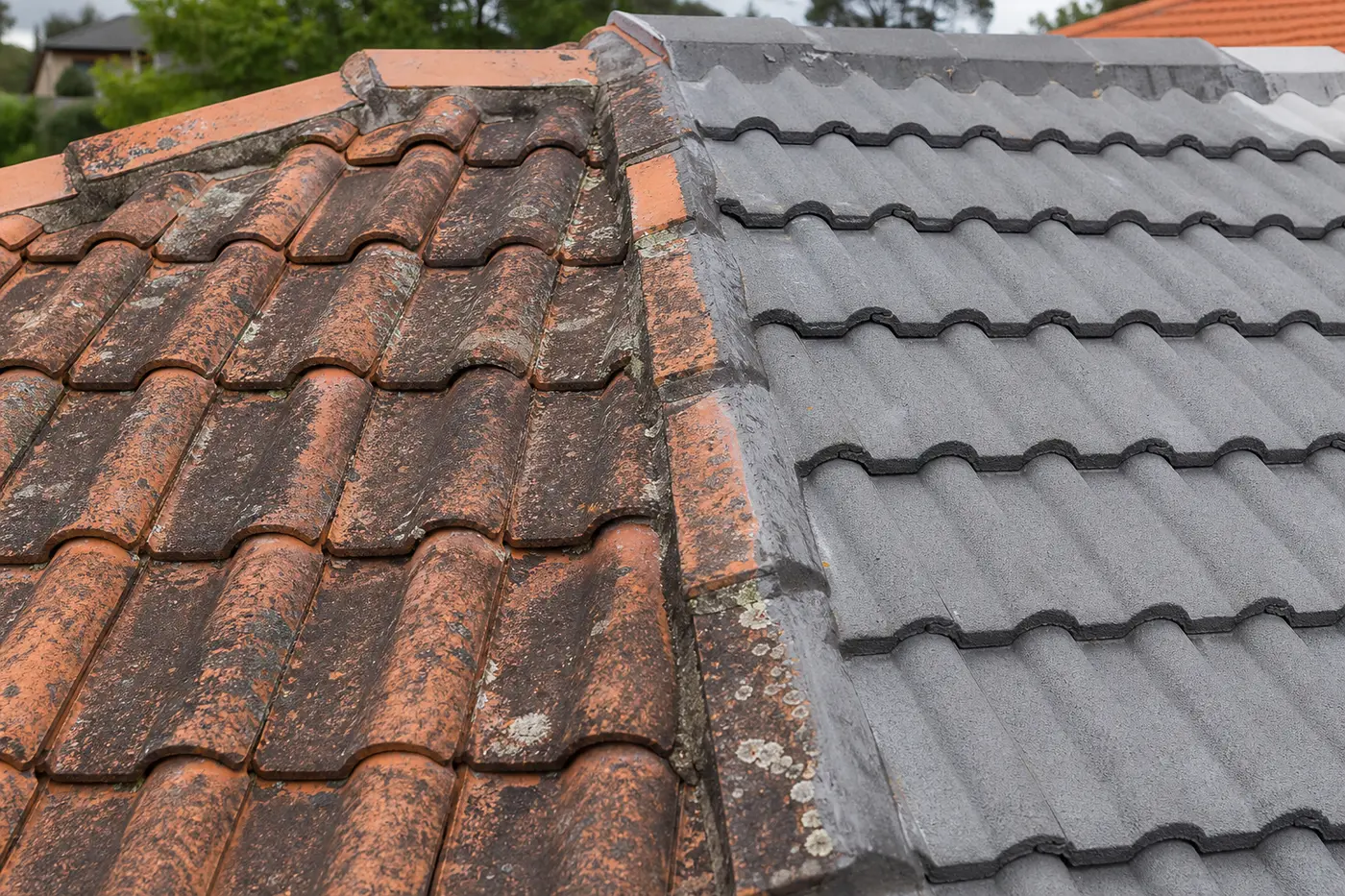
- The wear. A concrete tile that has lost its coating goes patchy and grey and grows moss readily. Terracotta fades more gracefully and often keeps a warmer tone even when it is decades old.
- Weight and edges. Concrete tiles are heavier and usually have crisper, squarer edges. Terracotta edges are often slightly more rounded from the firing.
If you are still not sure, that is fine. We identify it in about ten seconds at the inspection, and it changes what we recommend.
What each tile is actually made of
Terracotta is natural clay, shaped and fired in a kiln at high heat. That firing bakes the colour into the clay itself, which is why a good terracotta roof holds its look for a very long time. Concrete tiles are a moulded mix of sand, cement and pigment, then coated on top. The colour you see on a concrete tile lives in that surface coating, not in the body, and that single difference drives almost everything else that follows.
Where the two really differ
Neither tile is simply better. They suit different budgets and different priorities. Here is the honest rundown.
- Lifespan. Terracotta is the long-distance runner. Looked after, it is often quoted at 50 years or more, sometimes far longer. Concrete tiles are typically put at around 30 to 50 years. Both easily outlast most other roof coverings, so the real question is usually condition, not age alone.
- Colour over time. Terracotta keeps its baked-in colour and needs no repaint to stay looking right. A concrete roof relies on its surface coating for colour, so once that coating chalks and fades, the tile goes grey and starts looking tired.
- Cost up front. Concrete is the cheaper tile to buy and lay, which is why so many Central Coast homes built from the 1970s onward have it. Terracotta costs more up front for the material and the labour.
- Weight. Concrete is heavier than terracotta. On an older home, or one you are extending, that extra load on the frame is worth checking.
- Porosity. Older concrete tiles can soak up water once the coating goes, which makes them heavier still and more prone to moss. Terracotta is denser and less thirsty.
Which copes better with Central Coast salt air
This is where our local weather earns a mention. Homes from Terrigal and Avoca down to Umina cop salt-laden air, driving coastal rain and hard summer UV, and tiles feel all of it. The good news is that clay and concrete are both far more corrosion-resistant than bare metal, so neither tile rusts. What actually fails on a coastal tile roof is rarely the tile. It is the mortar bedding and pointing under the ridge caps, and the surface coating on concrete tiles breaking down under UV.
Terracotta tends to hold up slightly better cosmetically near the water because its colour is not sitting in a coating that salt and sun can strip. Concrete does perfectly well too, but it leans harder on that coating staying intact, which means a coastal concrete roof benefits from being recoated on time rather than left to go porous.
They do not get restored the same way
This is the part that catches people out, and it is the main reason the concrete-versus-terracotta question matters for a restoration. The two tiles need different treatment, and a roofer who treats them the same will get it wrong.
A full roof restoration on a concrete roof follows a clear path: high-pressure clean, replace any cracked tiles, rebed and repoint the ridge caps, then prime and recoat. That recoat is doing real work on concrete, restoring the colour and the protective surface the tile depends on.
Terracotta is more particular. Because the colour is fired in, traditional glazed terracotta was never meant to be painted, and slapping a standard concrete-tile coating over it can trap moisture and peel. Restoring terracotta is more about a careful clean, replacing broken tiles (matching an old profile is its own small art), and rebedding and repointing, with sealing done only where the tile actually suits it. If someone quotes you the exact same roof painting and resealing job for a terracotta roof as for a concrete one, that is a flag worth questioning.
So which should you choose?
If you already have a tile roof, the choice is usually made for you, and the smarter move is keeping what you have in good order rather than swapping tile types. Both terracotta and concrete are worth restoring while the tiles themselves are sound. If you are re-roofing or building and genuinely picking between them, it comes down to budget and how long you plan to stay: concrete for a lower up-front cost, terracotta for longer life and colour that never needs a repaint. It is the same weighing-up we walk through in our wider guide to choosing the right roofing material for a Central Coast home.
Where it stops being worth it is when the tiles are widely cracked, crumbling or leaking in several spots. At that point coating them only buys a season or two, and a full replacement is the better spend. We would rather tell you that honestly at the inspection than sell you a restoration that will not last.