The ceiling in the back bedroom has a brown patch that was not there before the last storm, and now you are wondering who pays to put it right. That question, whether you can make a roof leak insurance claim, is one we hear a lot on the Central Coast, usually the week after a big blow rolls in off the water. The honest answer is that it depends on what caused the damage. Sudden storm damage is often covered. A roof that has slowly worn out usually is not. Here is how insurers draw that line, and what actually helps a claim go through.
Sudden damage yes, slow wear no
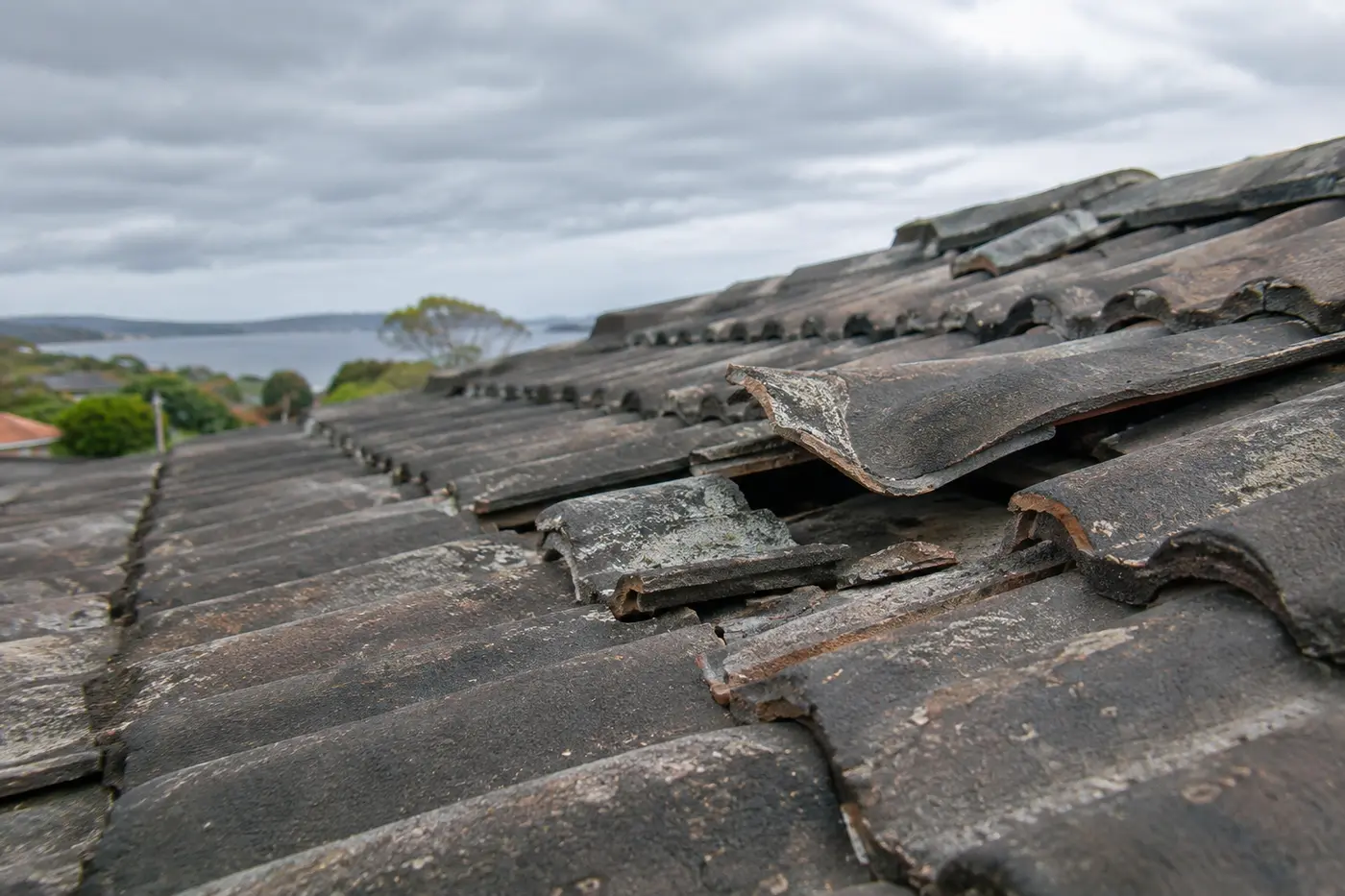
Almost every home insurance decision on a roof comes down to one question: was the damage sudden and unexpected, or did it build up over time? A storm that lifts tiles, a branch that punches through the roof, hail that cracks the sheeting, these are the events most policies are built to cover. The water that then runs into your ceiling, carpet and contents is usually part of the same claim. What insurers step back from is gradual deterioration. Perished pointing, rusted-through metal, sealant that dried out years ago, a roof quietly reaching the end of its life. That gets treated as wear and tear, and wear and tear sits outside almost every policy.
There is a subtle point worth knowing. Even when a storm is clearly to blame, some policies pay to repair the water damage inside but are stricter about the roof itself, especially if the roof was already old. Others cover both. This is why two neighbours with near-identical damage can get different answers, and why reading your own policy matters more than any general rule.
Why an older roof gets a claim knocked back
When an assessor climbs up, they are looking for the cause, not just the symptom. If they find water came in through a section of pointing that has been cracking for a decade, or sheeting that rusted through gradually, they can decline the claim on the grounds the roof was not maintained. It feels harsh when you are standing under a dripping ceiling, but that is the deal most policies spell out. The takeaway is not to panic, it is to understand it early. A roof kept in reasonable order, with the odd inspection on record, is far easier to claim on than one that has been left to itself for twenty years.
What is usually covered, and what is not
Every policy is different and the product disclosure statement is the document that actually decides your case, so treat this as a general guide rather than a promise:
- Often covered: storm and tempest damage, a fallen tree or large branch, impact damage, and the resulting water damage to ceilings, walls, flooring and contents inside.
- Usually not covered: general wear and tear, age, rust that developed over time, perished or cracked pointing, blocked gutters, poor maintenance, and pre-existing faults you knew about.
- The grey area: the cost of repairing the roof itself when it was already worn, and any damage made worse because a known leak was left unattended.
If you are not sure which side of the line your situation falls on, your insurer can tell you before you commit to anything, and it costs nothing to ask.
The report your insurer will actually ask for
A claim rarely turns on what you say happened. It turns on what can be shown. Insurers and their assessors want evidence of the cause, proof the damage was sudden rather than slow, the full scope of what needs doing, and a quote to put it right. A licensed roofer's written report, with clear photos from roof level, gives them exactly that. It is the difference between "a storm damaged my roof" and a documented account an assessor can sign off on. This is where our free written roof inspections on the Central Coast earn their keep, because you walk into the claim with the paperwork already in hand rather than scrambling for it later.
Steps that give your claim the best shot
You do not need to get on the roof, and you should not in the wet. The work that helps your claim is mostly on the ground:
- Make it safe inside first. Move valuables clear, catch the water, and take reasonable temporary steps to stop further damage. Most policies expect you to limit the loss where you safely can, and they let you claim sensible emergency costs, so keep the receipts.
- Photograph everything before you touch it. Dated photos of the ceiling, the contents and any damage you can safely see outside are the backbone of a claim.
- Report it to your insurer promptly. Delay is one of the easiest reasons for a claim to be questioned.
- Get a licensed roofer to inspect and document the cause.
- Do not authorise permanent repairs before the assessor has seen the damage, unless it is a genuine emergency to prevent further loss. Fix the cause too soon and you can remove the evidence your claim depends on.
Storm damage, or a leak that was always coming?
Because the whole claim hinges on sudden versus gradual, it helps to be honest with yourself about which one you have. A leak that appeared the night of a named storm, on a roof that was watertight the week before, points one way. A stain that has been slowly creeping across the ceiling for months, on a roof with brittle pointing and porous tiles, points the other. If you are not certain what is behind yours, our rundown of what actually causes a roof to leak can help you work out whether you are looking at storm damage or a roof near the end of its run.
If the claim is declined
Sometimes the answer is no, and it is usually because the roof was worn rather than storm-struck. That is a genuine cost to carry, and there is no sugar-coating it. The one bit of perspective we can offer is that a roof old enough to be excluded from a claim was going to need attention before long anyway. At that point the sensible money goes into fixing the underlying condition, whether that is repointing, a restoration or a full replacement, rather than patching the same failing roof after every storm. Our own work is backed by up to a 15-year warranty (conditions apply), so once it is sorted, it stays sorted.
Get the damage documented while it is fresh
A roof insurance claim moves fastest when the evidence is gathered early and put down in writing. If a storm has left you with a leak or a stained ceiling, contact Roof Restorations & Replacements Central Coast (NSW Licence #203374C) for a free, no-obligation inspection and a written report you can hand straight to your insurer.