If the mortar along your ridge caps is cracked, crumbling or dropping bits of grit into the gutters, you have probably started searching for what roof repointing costs on the Central Coast. It is one of the most common questions we get, and the honest answer is that no two roofs price the same. Rather than quote a figure that would be meaningless without seeing your roof, this guide explains what actually drives the price, when repointing alone is enough, and exactly what a proper repointing job involves.
What is roof repointing, and why does it matter here?
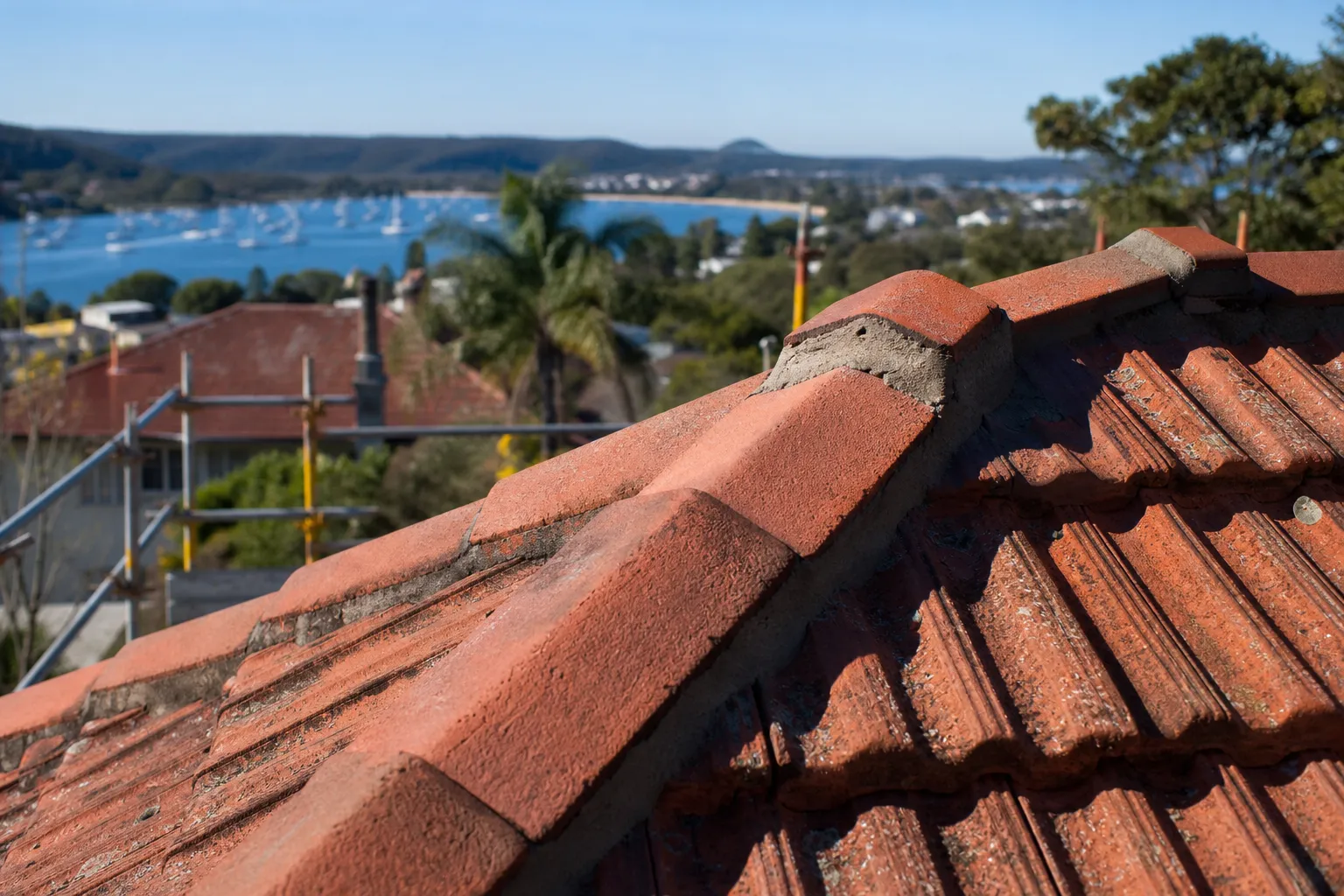
On a tiled roof, the ridge caps (the tiles that sit over the apex and the hips) are held in place by a bed of mortar. Over time that mortar (the “bedding”) shrinks and cracks. Repointing is the process of applying a fresh, flexible pointing compound over the joint to re-seal it and lock the caps down. Rebedding goes a step further, lifting the caps and relaying them on new mortar before pointing.
On the Central Coast this wears out faster than most owners expect. Salt-laden air from Terrigal to Umina, strong coastal winds, driving rain and relentless summer UV all attack old rigid mortar. Once it cracks, wind-driven water gets underneath the caps, and that is where leaks, damaged sarking and rotting battens start. Repointing is a small job compared with what it prevents, which is why we treat it as core maintenance rather than a cosmetic extra.
What drives roof repointing cost on the Central Coast?
When you ask three roofers for a price and get three different numbers, it is usually because these variables differ. Understanding them helps you compare quotes fairly rather than just picking the cheapest.
- Length of ridge and hip lines. Repointing is priced largely by the linear metres of capping, not your floor area. A simple gable roof has far less ridge and hip line than a complex home with multiple pitches, valleys and dormers.
- Bedding condition. If the mortar bed underneath is still sound, a straight repoint is quick. If caps are loose or the bedding has failed, they need rebedding first, which means more labour and a higher cost.
- Roof pitch and access. Steep pitches, two-storey homes and tight blocks need more safety setup, edge protection or scaffolding, all of which add to the day rate.
- Tile type and matching. Terracotta, concrete and older or discontinued profiles can require sourcing matching replacement caps, which affects both time and price.
- Extent of related repairs. Cracked or slipped tiles, rusted valley irons or gutter issues found during the job add to the scope. A good quote flags these upfront.
- Product quality. A premium flexible pointing compound that moves with the roof and resists UV costs more than a basic mortar mix, but it is what keeps the work watertight for years rather than seasons.
Because these factors vary so much house to house, the only reliable figure comes from an on-site look. Our free, no-obligation roof inspections include a written report with photos, so you can see the condition of your capping yourself before spending a cent.
Is repointing cheaper than the alternatives?
In relative terms, yes, and by a wide margin. Repointing the ridge lines is one of the most affordable jobs on a tiled roof. It is a fraction of the cost of a full roof restoration, and a small fraction of a complete roof replacement. More importantly, keeping your pointing sound is what defers those bigger, far more expensive jobs. Left alone, failed pointing lets water in, and water damage to timbers and ceilings costs many times more to put right than the repoint would have.
When is repointing on its own enough?
Repointing alone is usually the right call when:
- The tiles themselves are in good condition, not widely cracked, porous or delaminating.
- The problem is isolated to the ridge and hip mortar rather than the whole surface.
- The tile colour and glaze are still sound, so you are not chasing a full refresh of the look.
- You have caught it early, before leaks have caused internal damage.
When is a full roof restoration the smarter spend?
Sometimes repointing is a band-aid on a roof that needs more. A full restoration (which includes repointing as one of its steps) makes more sense when:
- The tile surface is faded, chalky, or growing moss and lichen across whole slopes.
- There are cracked or slipped tiles in numbers, not just the odd one.
- The roof is old enough that you want it sealed and coated to add years of life.
- You are preparing to sell and want the kerb appeal of a uniform, refreshed roof.
At the inspection we will tell you honestly which camp your roof sits in. We would rather point you to a straightforward repoint than sell you a restoration you do not yet need, and equally, we will not slap fresh pointing on a roof that is quietly failing underneath.
What a typical repointing job involves
Done properly, repointing is a methodical job, not a quick smear of mortar. Here is how a professional job runs on a typical Central Coast home:
1. Inspection and quote. We assess the capping, bedding, tiles and access, then provide a clear written quote so you know the full scope before work starts.
2. Cleaning the ridge lines. The caps and joints are cleaned of old loose mortar, dirt, moss and debris. Fresh pointing will not bond to a dirty or crumbling surface, so this step matters.
3. Rebedding where needed. Any loose or dislodged caps are lifted and relaid on fresh bedding mortar so they sit true and stable before pointing.
4. Applying flexible pointing. A UV-stable flexible pointing compound is applied along both sides of every cap in your chosen colour. Because it flexes with the roof’s daily expansion and contraction, it resists the cracking that defeats old rigid mortar.
5. Minor repairs. Cracked or slipped tiles spotted during the work are replaced, and we flag anything larger, like valley or gutter issues, for you to decide on.
6. Final check and clean-up. The whole roof line is checked for missed joints and neat finishing, and debris is cleared from gutters and the ground.
If the inspection turns up bigger problems, our roof repair team can handle those in the same visit, saving you a second call-out.
Frequently asked questions
How often does a roof need repointing?
It varies with exposure, but many Central Coast tile roofs need attention to their pointing somewhere in the range of a couple of decades, sooner for homes close to the coast where salt and wind accelerate wear. Regular inspections catch it before leaks start.
Can I just repoint the section that has failed?
Sometimes, but pointing tends to fail across a roof at a similar rate. If one ridge has gone, the others are usually not far behind, so doing the whole roof at once is often better value than repeat call-outs.
Is repointing worth it, or should I re-roof?
If the tiles are sound and only the mortar has failed, repointing is by far the cheaper and smarter choice. Re-roofing only makes sense when the tiles themselves are at the end of their life.
Does repointing come with a warranty?
Our workmanship is backed by up to a 15-year warranty (conditions apply), so you have peace of mind that the job will hold up against our coastal weather.
Get a real figure for your roof
From Gosford and Erina through to the northern beaches, our licensed local team (NSW Licence #203374C) has repointed and restored roofs right across the Central Coast. Instead of guessing from an online range, start with a free inspection and an honest, written quote for your roof specifically. Contact Roof Restorations & Replacements Central Coast today to book yours.