If the upstairs bedrooms feel like an oven by mid-afternoon, or you have spotted black mould creeping across the ceiling in winter, the problem may not be your insulation or your air conditioner. It may be your roof space. A poorly ventilated roof cavity traps heat in summer and moisture in winter, and on the humid Central Coast that combination causes very real damage over time. This guide explains how roof ventilation actually works, whether whirlybirds are worth it, how many you need, and how to tell if your home has a ventilation problem in the first place.
Why roof ventilation matters on the Central Coast
Between the coastal humidity, warm summers and cooler damp winters, Central Coast roof cavities cop it from both directions. In summer, a dark tile or metal roof can push the air in your ceiling space well past 50°C. That heat radiates down into your living areas, so the air conditioner works harder, your power bill climbs, and the top floor never quite cools down.
In winter the opposite problem takes over. Warm, moist air from cooking, showers and drying clothes rises into a cold, still roof cavity, hits the underside of the cold roof and condenses into water. That trapped moisture is what leads to musty smells, damp insulation that stops working, rusting fixings and screws, timber rot and the black mould that shows up on cornices and ceilings. Good ventilation lets that hot or damp air escape and draws fresh air in behind it, keeping the whole cavity closer to the outside temperature.
Signs your roof space needs better ventilation
You do not need to climb into the roof to spot the warning signs. Watch for:
- Upstairs or top-floor rooms that stay hot long after the sun has gone down.
- A wave of heat when you open the manhole into the ceiling space.
- Musty or damp smells inside the home, especially in cooler months.
- Black mould on ceilings, cornices or in wardrobes against external walls.
- Condensation or water droplets on the underside of the roof or on metal fixings.
- Insulation that looks compressed, damp or discoloured.
- Rusting screws, brackets or valley trays visible in the roof cavity.
Any of these point to stale, trapped air with nowhere to go. Left alone, the moisture problems in particular shorten the life of your roof structure and can undermine an otherwise sound roof.
Do whirlybirds actually work?
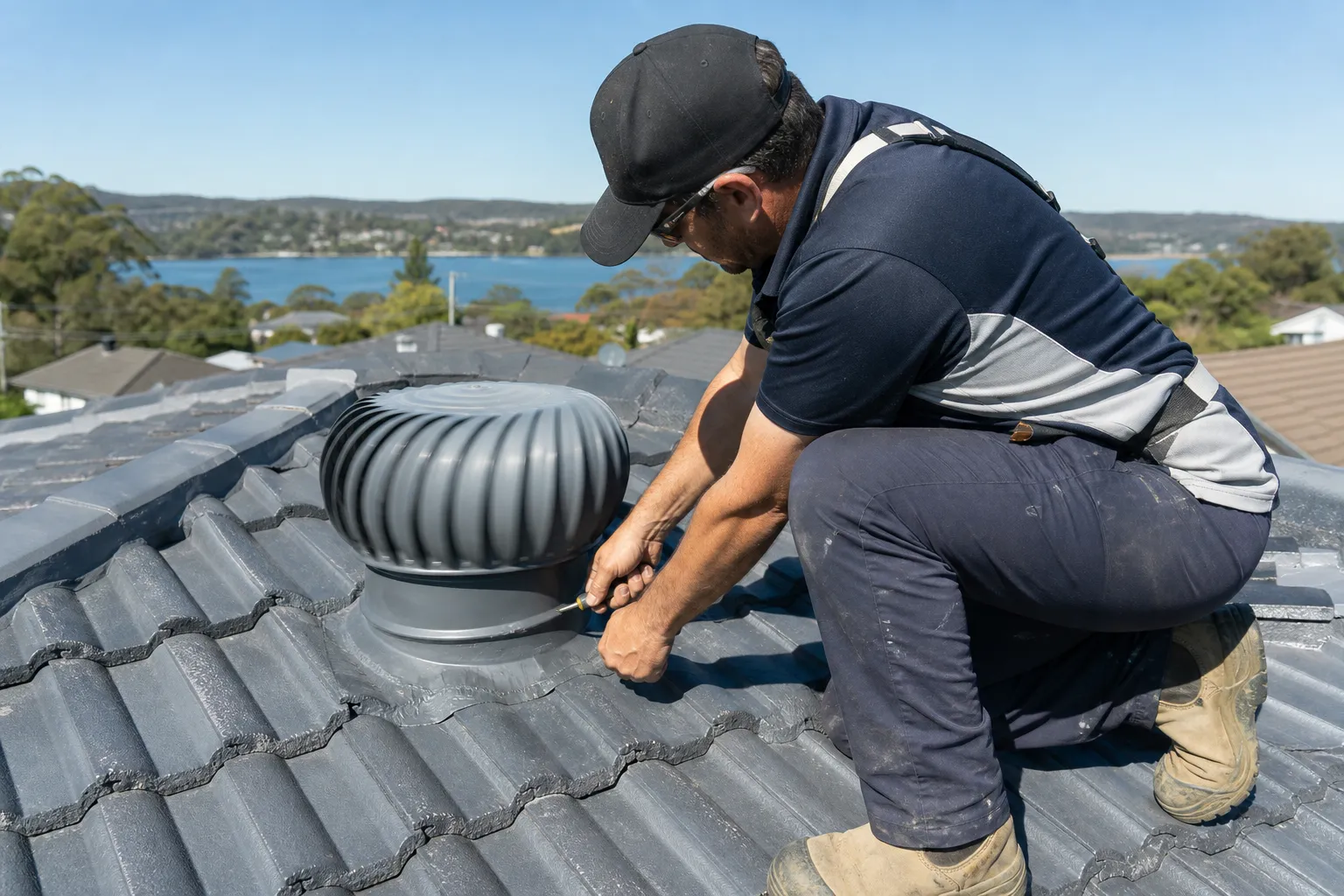
Whirlybirds (the spinning turbine vents you see dotted along ridgelines) are the most common and most affordable roof vent in Australia. As the wind turns the turbine (and as hot air rises through it), they draw warm, stale air out of the roof cavity. They use no power, have no running cost and, when sized and installed correctly, they genuinely do move air.
The honest catch is that a whirlybird can only exhaust as much air as can be replaced. A vent pulling air out with no fresh air coming in achieves very little. It is like sipping a thick drink through a straw with your finger over the top. This is why a single whirlybird on a large roof often disappoints, and why some people conclude they “do not work.” They work when they are part of a balanced system: exhaust vents high on the roof and intake vents low down, usually in the eaves, so air can flow through.
How many whirlybirds do I need?
As a rough rule, a standard three-bedroom Central Coast home needs at least two whirlybirds to make a noticeable difference, and larger or two-storey homes often need three or four, paired with adequate eave or soffit intake vents. The exact number depends on your roof area, pitch, the size of the ceiling cavity and how much intake ventilation you already have. More is not always better. Too many vents without matching intake just clutter the roof without improving flow. An on-site assessment is the only way to size it properly, which is where a professional roof inspection pays for itself.
Whirlybirds vs solar vents vs ridge vents
Whirlybirds are not the only option. The right choice depends on your roof and your budget:
- Whirlybirds (wind turbine vents): The budget-friendly workhorse. No power needed, low maintenance, effective when correctly sized and paired with intake vents. Best value for most homes.
- Solar-powered roof vents: A solar panel drives a fan that actively pulls air out, moving far more air than a passive whirlybird and working even on still days. They cost more up front but shift much larger volumes, which suits big or badly heat-affected roofs.
- Ridge and eave venting: Continuous vents built into the ridgeline and eaves create steady passive airflow across the whole cavity. This is often the neatest, most effective approach on a metal roof and is well worth considering during a re-roof.
For many Central Coast homes a combination (whirlybirds or a solar vent for exhaust plus proper eave intake) delivers the best result for the money.
Common questions about roof vents
Do whirlybirds let rain in?
A correctly installed whirlybird should not. The turbine head and its curved fins are designed so water is thrown outward as it spins, and a well-flashed base keeps the surrounding tiles or sheets watertight. Leaks almost always come down to poor installation or a worn-out unit, another reason to have vents fitted by an experienced roofer rather than as a rushed DIY job.
Do I still need vents if my roof is insulated?
Yes. Insulation slows heat moving between your ceiling and the rooms below, but it does nothing to remove the hot or moist air that builds up above it in the cavity. Ventilation and insulation solve different problems and work best together.
Will a whirlybird make my house noticeably cooler?
It will lower the temperature of the roof cavity, which reduces the heat radiating into your rooms and eases the load on your air conditioning. It is not an air conditioner and will not chill the house on a 40°C day, but a well-ventilated roof makes a real, measurable difference to comfort and running costs over a season.
Do metal roofs need ventilation too?
They do. Metal heats up fast and, without sarking and airflow, is very prone to condensation on the underside in our humid conditions. Ridge venting and eave intake are usually the tidiest solution on metal.
The best time to add ventilation
Vents can be retrofitted to almost any roof, but the ideal moment is while other roof work is already underway. If you are booking a roof restoration or a full replacement, adding whirlybirds or ridge vents at the same time saves on access and set-up costs, and means the ventilation is designed into the finished roof rather than bolted on later. It is a small addition that protects the far larger investment you are making in the roof itself.
Get your roof space assessed
Guessing at ventilation usually means too few vents, no intake, or the wrong system for the roof, and that is money spent for little result. The better path is a proper look at your roof cavity, roof type and existing airflow, then a clear recommendation on what your home actually needs. Our licensed local team assesses homes right across the Central Coast, from Gosford to the beaches, and gives honest advice on whether whirlybirds, solar vents or ridge venting is the right call for your roof. Get in touch with Roof Restorations & Replacements Central Coast for a free inspection and a straightforward plan to keep your roof cooler, drier and healthier all year round.