Plenty of homes across the Central Coast still wear their original roof from the post-war building years, and a fair number of those are made of asbestos cement. If yours is a low grey corrugated roof, or the deep-profile sheeting people know as Super Six, there is a real chance you are looking at asbestos. That changes things. An asbestos roof replacement is not a job you patch up, put off, or tackle yourself on a Sunday. Here is how to work out what you have, why it needs replacing rather than repairing, and what the process actually looks like on a Central Coast home.
Why so many older local homes still have one
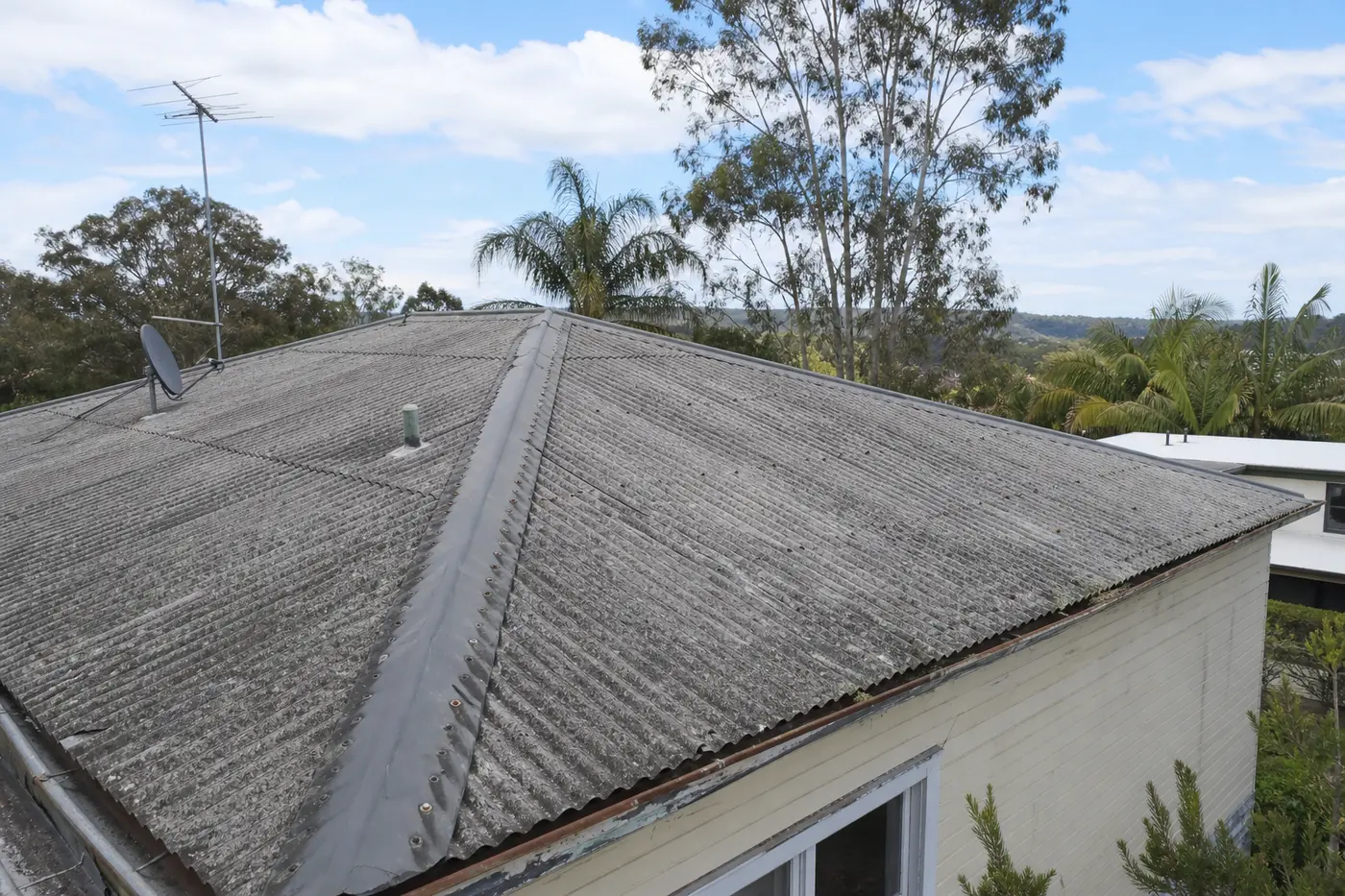
The Central Coast grew fast from the 1940s through to the 1980s, and asbestos cement was the cheap, fireproof, everywhere material of that era. It went into fibro wall sheeting, eaves, and a huge number of roofs. On a roof it usually shows up as grey corrugated cement sheets rather than steel or tile, and the Super Six profile (a deep, wide corrugation) is the one we see most often on homes around Woy Woy, Umina and the older pockets of Gosford. After decades of coastal sun and salt air, those sheets tend to go chalky, faded and brittle, and moss takes hold in the low points.
One honest word of caution. You cannot tell for certain that a roof is asbestos just by looking at it, and you should not climb up and snap a piece off to check. If the home is of the right age and the sheeting has that grey cement look, treat it as asbestos until a lab test says otherwise. A small sample can be taken and tested properly if there is any doubt.
An asbestos roof cannot be repaired, only replaced
This is the part that surprises people. A tile roof you can repoint, a metal roof you can reseal, but an asbestos roof does not work that way. The danger is in disturbing it. Drilling, cutting, sanding, walking on brittle sheets and, above all, high-pressure cleaning all send fibres into the air, and those fibres are the health risk. So the usual roof fixes are off the table. You should not pressure wash it, you should not paint or reseal it, and you should not scrape moss off it.
A sound, undamaged, painted sheet that is being left completely alone can sometimes stay put. But once the sheeting is cracking, chalky, or letting water in, it has reached the end of its life, and the safe answer is to take it off and replace it rather than keep patching a hazard.
Removal is a licensed job, not a DIY one
This is the step people are most tempted to cut corners on, and the one where you really must not. In NSW, any job over about ten square metres of bonded asbestos has to be handled by a removalist licensed by SafeWork NSW. A whole roof is far more than that. The work means wetting the sheets down, lifting them off whole where possible instead of breaking them, wrapping and sealing the waste, and disposing of it at a licensed facility with the right paperwork.
A general handyman is not set up to do that safely or legally, and neither are you with a borrowed ladder. Doing it properly protects your own household, your neighbours during the work, and the next owner down the track, because a compliant removal is documented. It is worth every cent of doing it once, correctly.
What usually goes on in its place
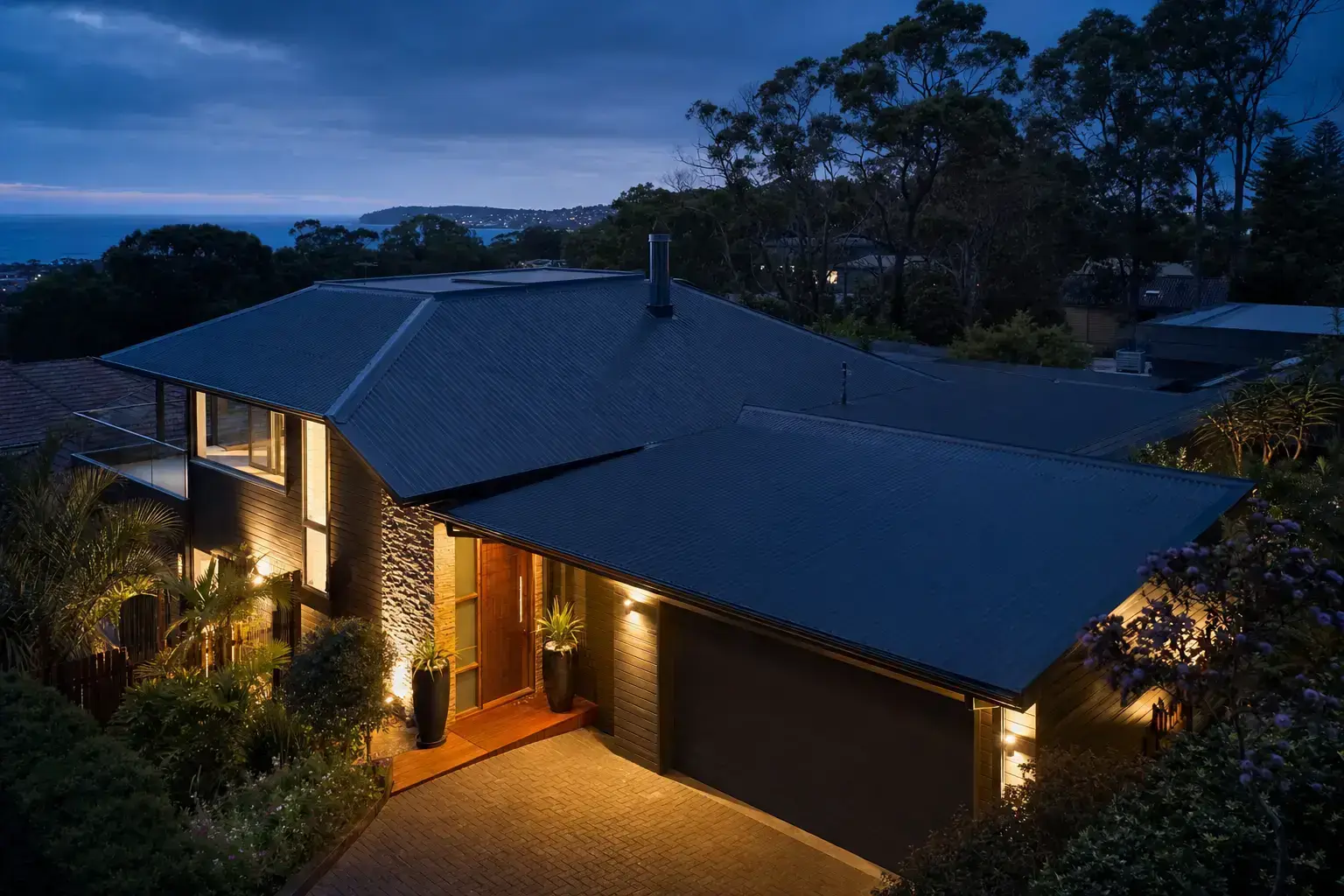
Once the old roof is gone, most homeowners we work with upgrade to a new Colorbond® steel roof. It is a natural fit for these homes. Metal is light, which is kind to an older frame that has been carrying heavy cement sheeting for fifty years, it goes on quickly, and coastal-grade Colorbond® is built to cope with our salt-laden air. The end result is a modern, fully sealed roof that is safe to walk on, clean and maintain for good.
It is the same path a lot of tile owners take, and if you want to see how that side of it runs, our guide to a tile-to-metal conversion covers the metal roofing choices in more detail. Either way, taking off an old roof and installing a new one is a full roof replacement, and the workmanship is backed by our warranty of up to 15 years (conditions apply), on top of the Colorbond® manufacturer warranty on the sheeting itself.
What the job looks like start to finish
Done properly, an asbestos roof replacement runs as a staged job with the safe removal built into the front of it:
- Inspection and written quote. We look at the roof, confirm what it is made of (with a lab test if there is any doubt), measure up, and check the frame, pitch and access before pricing it.
- Licensed removal. The old sheeting comes off under the proper controls and goes to a licensed tip, not the local skip.
- Structural check. With the roof open, the timber, battens and framing are inspected and any tired sections sorted while access is easy.
- New roof installed. Fresh sarking, battens, sheeting, flashings, ridge capping, and gutters or downpipes where they need doing.
- Clean up and sign off. The site is left clean and the finished roof is checked watertight.
What drives the cost of replacing an asbestos roof
Every roof is different, so the only reliable figure comes from an on-site look. The things that move the price are the roof size and pitch, whether it is single or double storey and how easy the access is, the condition of the old sheets, how much framing needs attention once the roof is open, and the new roofing material and grade you choose. On top of all that sits the licensed removal and tip disposal, which is the main reason an asbestos roof replacement costs more than a straight re-roof of the same size. If you want a sense of general roof pricing in the area first, our Central Coast roof replacement cost guide lays out the ranges, but the asbestos removal is an added line on top of those.
Does replacing it add value to your home?
Generally, yes. Buyers are wary of asbestos, and a building or pest report that flags an old asbestos roof can stall a sale or knock the price down. A home with a professionally replaced, documented roof takes that worry off the table, along with a cost the buyer would otherwise inherit. Beyond resale, you end up with a roof you can safely clean, walk on and maintain, and a fresh one over your head that is built for the coast. For a lot of owners, the peace of mind is the real reason they finally deal with it.
Not sure what your roof is made of?
If you think your home might have an asbestos roof, the safe next step is to have someone who knows what to look for take a proper look, not to climb up for a closer inspection yourself. Our licensed local team (NSW Licence #203374C) can confirm what you have, arrange safe removal, and quote your new roof in writing. Get in touch with Roof Restorations & Replacements Central Coast to talk through a roof replacement for your home, and we will give you an honest recommendation for your roof specifically.