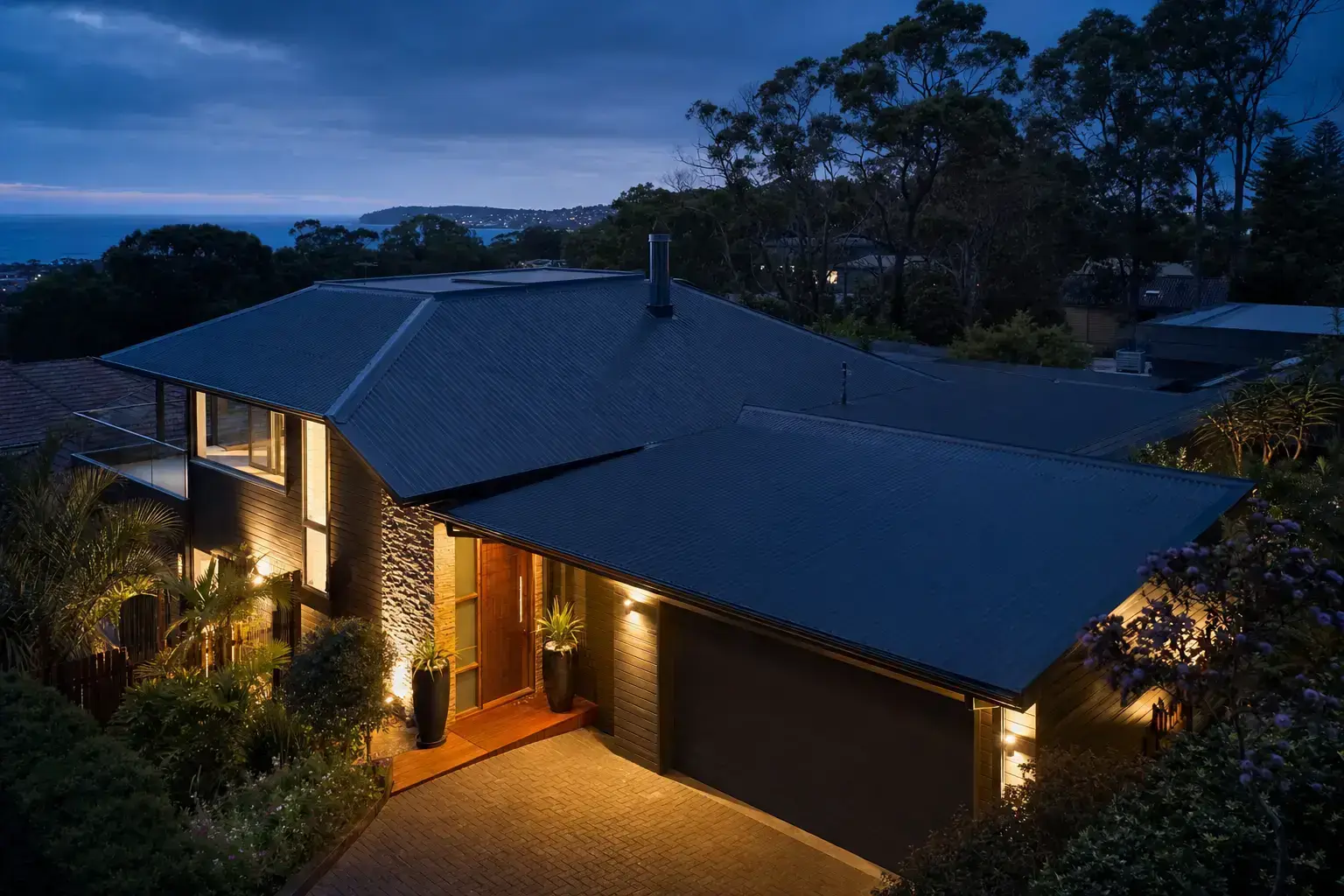
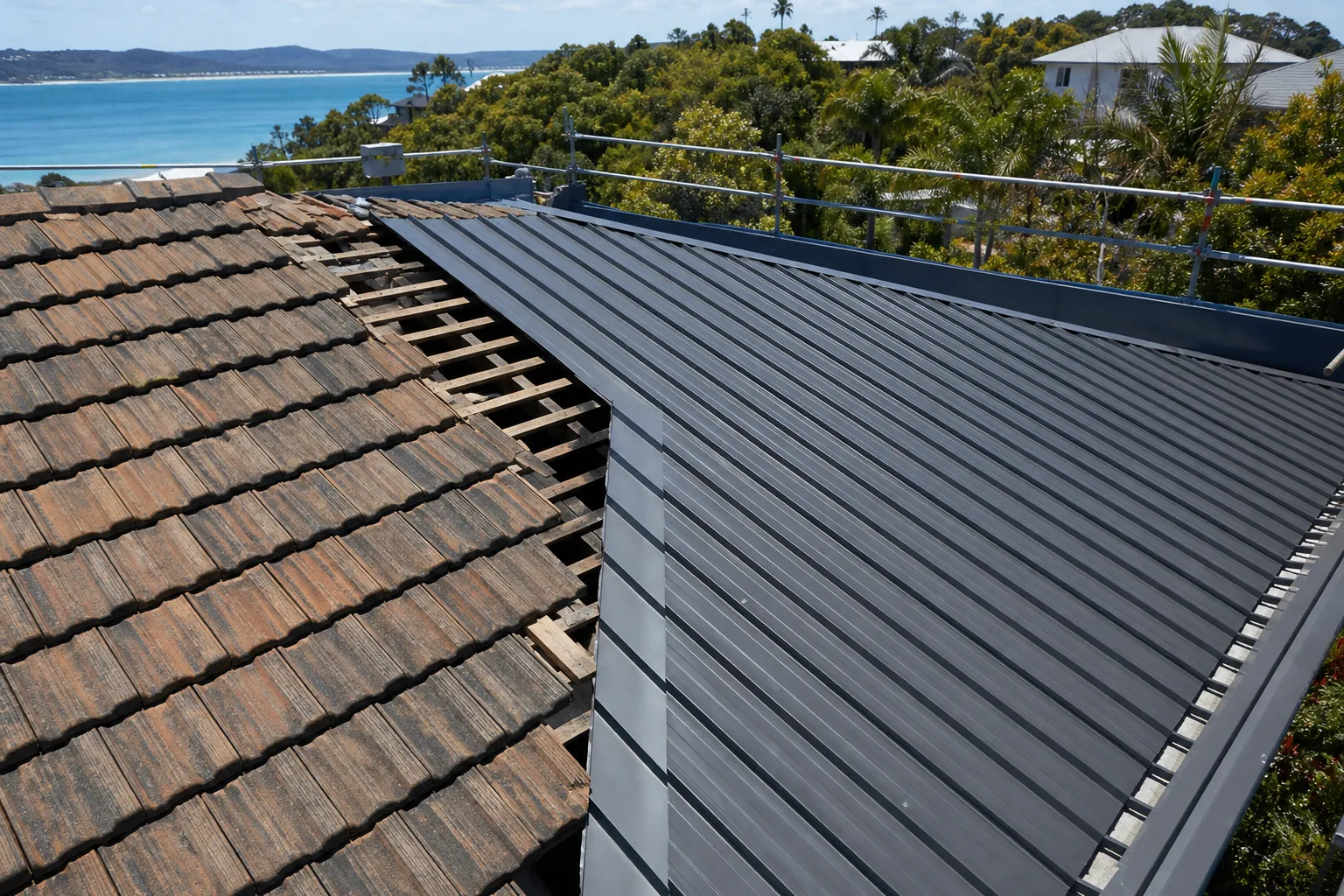
If your tile roof is shedding grit into the gutters, cracking underfoot and needing repointing every few years, you may be weighing up whether to keep patching it or switch to metal altogether. Converting a tile roof to Colorbond® is one of the biggest questions we get from Central Coast homeowners, and it is a genuinely different decision from a straight restoration. This guide explains what a tile-to-metal conversion actually involves, how the two materials compare in our coastal climate, and how to tell whether converting is the smart spend or an unnecessary one.
What is a tile-to-metal roof conversion?
A conversion means removing your existing tiles (and usually the old battens and sarking beneath them) and replacing the whole covering with a metal roof, most commonly Colorbond® steel. It is more than a re-roof over the top: the old system comes off, the structure is checked, and a new, lighter, fully sealed metal system goes on in its place. It sits alongside a full roof replacement as one of the bigger investments you can make in your roof, but for the right home it pays that investment back in lower maintenance and a much longer service life.
Why Central Coast homeowners consider switching to metal
The Central Coast climate is hard on tile. Salt-laden air from Terrigal through to Umina, driving coastal rain, strong winds and relentless summer UV all work at the weak points of a tiled roof: the mortar bedding, the pointing and the porous surface of ageing tiles. Once tiles become brittle and the pointing cracks, wind-driven water finds its way under the caps and into the roof cavity. Owners typically start looking at metal when:
- The tiles themselves are failing: widely cracked, porous or delaminating, not just the odd broken one.
- Leaks keep coming back despite repairs and repointing.
- They are tired of the upkeep a tiled roof needs to stay watertight in a coastal environment.
- The roof structure is under strain and a lighter covering would help.
- They want a modern look and the clean lines of a Colorbond® profile.
Tile versus metal: how they compare
Neither material is simply "better". They suit different homes and priorities. Here is how they stack up for a typical Central Coast property:
- Weight. Metal is a fraction of the weight of concrete or terracotta tile. That reduces load on your roof frame and walls, which can matter on older homes.
- Lifespan. A quality metal roof, properly installed, can last for decades with minimal fuss. Tile can also last a long time, but only if the pointing and bedding are maintained.
- Maintenance. Metal has no mortar to crack or repoint and far fewer entry points for water. Tile needs periodic repointing and tile replacement to stay sound.
- Coastal durability. For homes near the water, coastal-grade Colorbond® steel is engineered to resist salt corrosion, an important consideration close to the beaches.
- Look. Tile offers a traditional profile and a range of colours; metal gives crisp, contemporary lines and a wide Colorbond® palette.
- Noise and heat. Modern metal roofs are installed over insulation and sarking, which keeps rain noise and heat gain well controlled, a far cry from the old tin-shed reputation.
- Cost. A conversion costs more up front than restoring a sound tile roof, but removes the ongoing repointing and tile-repair cycle.
What the conversion process involves
Done properly, a tile-to-metal conversion is a staged job, not a quick swap. Here is how it typically runs on a Central Coast home:
1. Inspection and quote. We assess the tiles, the roof frame, the pitch and access, and confirm whether your structure suits a metal system. You get a clear written quote before any work starts. Book a free roof inspection to begin.
2. Removal of the old roof. The tiles are stripped and removed, along with tired battens and old sarking. This is also when any hidden issues in the frame come to light.
3. Structural check and prep. The rafters and framing are inspected and any damaged or rotten timber is repaired so the new roof sits on a sound base.
4. Sarking and battens. New reflective sarking and metal battens are installed to manage condensation, add insulation and give the sheeting a true, level fix.
5. Installing the metal sheeting. The Colorbond® sheets are cut, laid and fixed in your chosen colour, with new flashings, ridge capping, valleys and penetrations sealed properly.
6. Gutters, finishing and clean-up. Guttering and downpipes are checked or replaced as needed, the whole roof is inspected for a watertight finish, and all debris is removed from your property.
Is converting worth it, or should you restore instead?
Conversion is not always the right answer. If the tiles themselves are still in good shape and only the surface coating and pointing have aged, a full roof restoration (clean, repairs, repointing and a fresh protective coating) is usually the smarter, more affordable spend. Restoration makes sense when:
- The tiles are sound, not widely cracked or crumbling.
- You are happy with a tiled look and want to refresh rather than replace.
- Budget is the priority and the roof still has years of life in the tiles.
Converting to metal earns its keep when the tiles are genuinely at the end of their life, when the roof structure would benefit from a lighter load, or when you want to be free of the tile-and-mortar maintenance cycle for good. At the inspection we will tell you honestly which camp your roof sits in. We would rather steer you to a straightforward restoration than sell you a conversion you do not need.
What affects the cost of a conversion
Because every roof is different, the only reliable figure comes from an on-site look. The main variables are:
- Roof size and complexity: the area of sheeting plus the number of valleys, hips and penetrations.
- Removal and disposal of the old tiles, battens and sarking.
- Structural repairs uncovered once the tiles are off.
- Pitch and access: steep or two-storey roofs need more safety setup.
- Product choice: standard versus coastal-grade Colorbond®, and the profile and colour selected.
Frequently asked questions
Do I need council approval to convert my roof?
Like-for-like re-roofing often falls under exempt or complying development in NSW, but changing the roof material or profile (and homes in heritage or specially controlled areas) can have extra requirements. We help you confirm what applies to your property before work begins.
Is a metal roof noisy or hot in summer?
Not when it is done properly. Installed over insulation and reflective sarking, a modern Colorbond® roof keeps rain noise and summer heat well under control. The noisy, hot tin roof is a thing of the past.
How long does a tile-to-metal conversion take?
Most homes are completed within several days to a week, depending on the size and complexity of the roof and the weather. We give you a realistic timeframe with your quote.
Can any tile roof be converted to metal?
The large majority can, and the switch to a lighter covering is often beneficial. We check the frame and pitch during the inspection to confirm your roof is a good candidate before recommending it.
Does the work come with a warranty?
Our workmanship is backed by up to a 15-year warranty (conditions apply), and Colorbond® steel carries its own manufacturer warranty, so you have long-term peace of mind against our coastal weather.
Get honest advice for your roof
From Gosford and Erina through to the northern beaches, our licensed local team (NSW Licence #203374C) has restored, replaced and converted roofs right across the Central Coast. Rather than guess from an online range, start with a free inspection and an honest, written recommendation for your roof specifically. Contact Roof Restorations & Replacements Central Coast today to find out whether restoring or converting is the right move for your home.