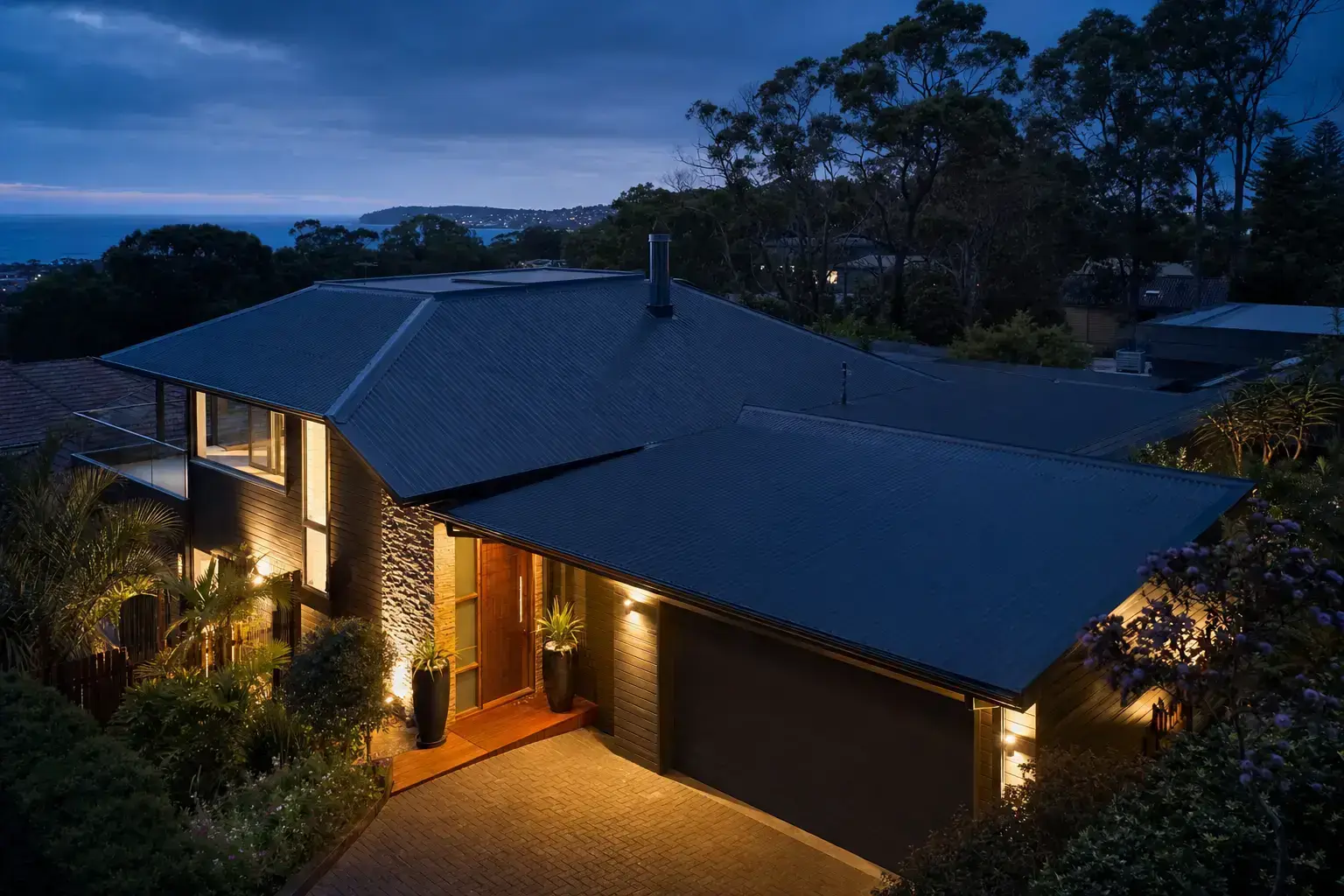
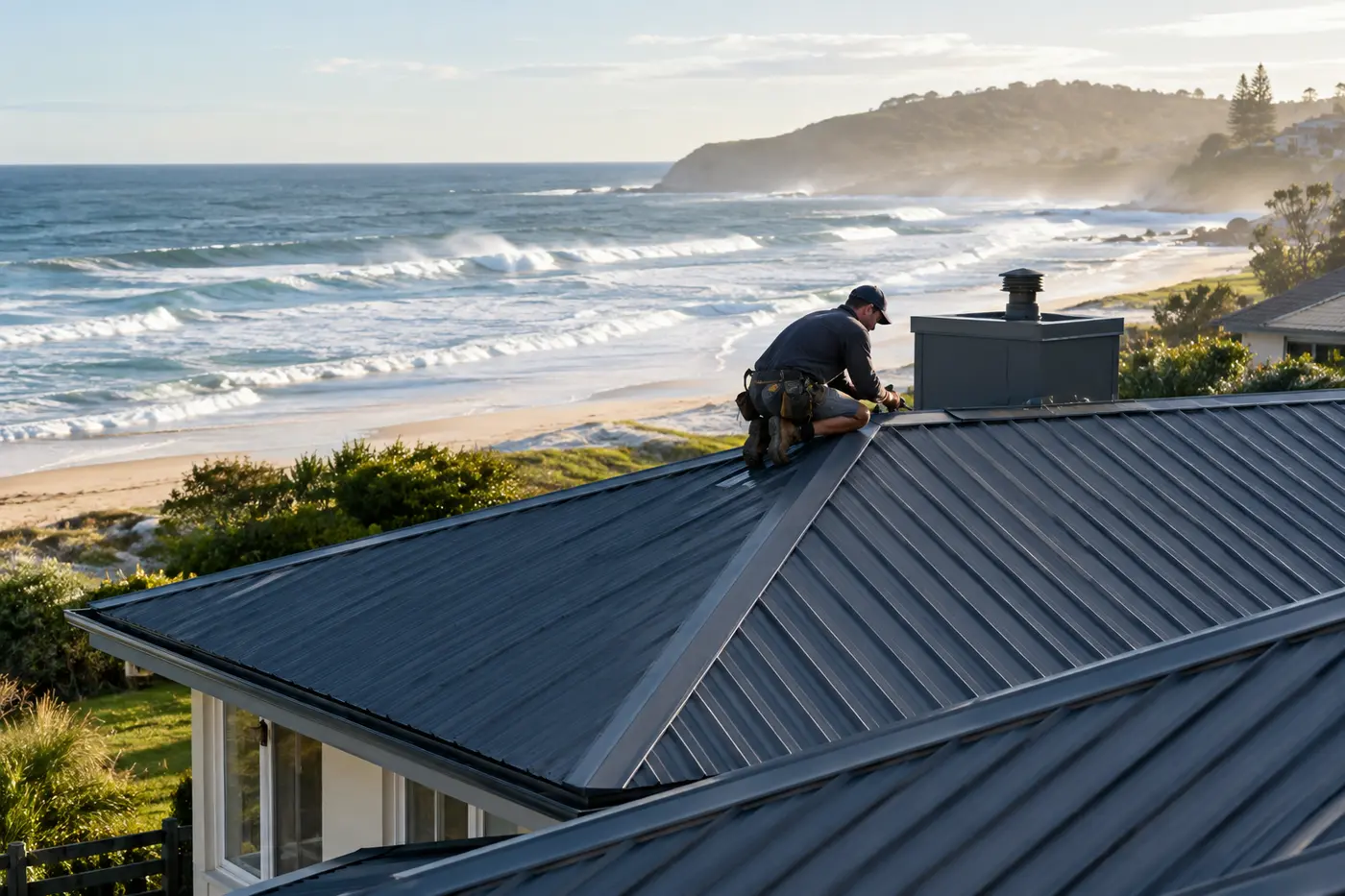
A couple two streets back from the beach at Terrigal had two quotes on the kitchen bench for a new metal roof. One said Colorbond. The other said Colorbond Ultra, and it cost more. Their question to us was simple: is the dearer one a genuine need, or an upsell? It is one of the most common questions we get from beachside homeowners, and the honest answer is that Colorbond Ultra is the right call for some Central Coast homes and money wasted on others. Which side you fall on depends on your address, more than on anything else.
Same look from the street, tougher protection underneath
Standard Colorbond is steel with a metallic coating to resist rust, then layers of baked paint on top. It handles ordinary coastal air well, which is why it is on so many roofs from Gosford to Toukley.
Colorbond Ultra is a separate grade that BlueScope makes for severe marine and industrial environments. The difference is mostly hidden: heavier corrosion protection sits beneath the paint, so salt takes far longer to work through to the steel. From the footpath, an Ultra roof and a standard one look identical.
That is also why the choice gets skipped. Nobody can tell by looking, so a roof can go on in the wrong grade and nobody knows for years. Then the edges start to rust.
Distance from the surf is the starting point, not the whole answer
The thing that eats metal roofs near the beach is salt spray, the fine mist that breaking waves throw into the wind. Homes within a few hundred metres of the surf are the ones we most often steer towards Ultra. Past that, standard Colorbond usually does the job.
Distance alone can mislead, though. When we look at a house we also weigh up:
- Whether the water nearby is open ocean or calm water like Brisbane Water or Tuggerah Lake
- Which way the house faces, and whether onshore winds hit the roof directly
- Height: a roof on a headland or high on a slope catches more spray than one tucked behind the dunes
- How much shelter the surrounding houses and trees give
BlueScope publishes its own guidance on which product suits which environment, and its product warranties depend on the steel being matched to the site. So we check every quote against that guidance rather than guessing. Getting it wrong on a beachfront house can affect the manufacturer warranty as well as the roof.
Where on the Coast we usually specify it
The front rows along our ocean beaches are Ultra territory: the beachfront streets of Terrigal, Wamberal, Avoca Beach, Umina Beach, Bateau Bay and The Entrance. At Wamberal we almost run two specifications in one suburb, marine grade steel along the beachfront and standard Colorbond for the streets back around the lagoon.
Woy Woy is a good example of the middle ground. It sits on Brisbane Water, so it gets constant tidal salt air but not the full ocean blast. Most homes there are fine with standard Colorbond, and we judge the waterfront ones individually.
Inland suburbs like Wyong, Narara and Kariong get very little salt. Paying for Ultra there buys protection the roof will never use, and we will tell you so.
The sheets are only half the job
This one surprises people. On a coastal roof the sheets are rarely the first thing to fail. Near the beach, fasteners usually rust first, then the valleys and gutters, then the sheet edges. An Ultra roof held down with ordinary screws and finished with standard grade flashings still has weak points.
So when we specify Ultra, it is a whole system: stainless steel fasteners, and flashings, ridge capping and gutters in a grade that suits the exposure. We also clean off the metal filings (called swarf) that cutting and drilling leave on the roof at the end of each day, because those tiny steel particles rust and stain the surface within weeks. And we watch for mixed metals, since runoff from copper or lead can corrode Colorbond below it.
If you are weighing up a new roof near the water, our Colorbond Ultra and standard Colorbond installs are specified street by street for exactly this reason.
You get fewer colours to pick from
Ultra comes in a smaller colour range than standard Colorbond. Plenty of the shades that suit coastal homes are in it, but not every colour on the standard chart. If your heart is set on a particular shade, check it is offered in Ultra before you sign anything. Our guide to roof colours that cope with coastal sun and salt covers how the popular shades behave here.
What the price difference really means
Ultra costs more than standard Colorbond. But the steel is only part of a re-roof. Removing the old roof, labour, sarking, flashings and disposal all cost the same whichever grade you choose, so the difference on the total job is smaller than the price per sheet suggests.
Where a house sits on the borderline, we quote both grades side by side and explain the trade-off plainly. On a front row beach house, the cheaper grade is usually the more expensive roof over its life.
Ultra still needs a hose now and then
Rain is a metal roof's friend near the coast, because every downpour rinses the salt off. The trouble spots are the parts rain never reaches: under the eaves, beneath verandah roofs and on sheltered sections of gutter. Salt builds up there and holds moisture against the steel, whatever the grade. Our Zincalume vs Colorbond comparison goes into why those sheltered spots corrode first.
A gentle hose down of those areas from the ground every so often helps a lot. For homes in the front line salt zone we also suggest an inspection every 2 to 3 years, so a rusting fastener gets swapped before it becomes a rusted sheet.
Get the right grade for your street
If you have a quote in front of you and are not sure whether it should say Ultra, call Roof Restorations & Replacements Central Coast on (02) 4326 0722 (NSW Licence #203374C), Monday to Saturday, 7am to 5pm. We will look at your house, check its exposure and tell you which grade it actually needs. Our metal roofing team installs both, with a 15-year warranty (conditions apply), and the inspection and quote are free.