Most people who ring us about a new metal roof have already made the big decision. They want Colorbond. What stops them in their tracks is the colour. There are more than twenty in the standard range, they all look good on a little sample chip, and the choice is going to sit over your head for the next thirty or forty years. It is a lot of pressure for something the size of a business card.
We have this conversation on driveways across the Coast most weeks, so here is the honest version of it. Which colours actually suit a home here, how the light and dark shades behave in our climate, and the one thing about picking a roof colour near the water that a lot of homeowners never get told.
Why colour matters more on the Central Coast
A roof colour is not just a look. Where we live, it does real work. Our homes sit under strong summer UV, they cop salty air off the water, and the roof is usually the single largest surface on the house. Get the colour right and it holds its finish for decades while keeping the place a touch cooler. Get it wrong and you are looking at a shade that fights the rest of the house, or a roof cavity that bakes through February.
Two things drive most of the decision: how the colour handles heat, and how it works with everything already on your home. We will take them one at a time.
Light or dark: what it does to the heat
This is the question we get asked most. Lighter colours reflect more of the sun's energy, darker ones absorb more of it. On a hot Central Coast afternoon that difference is real, and you feel it upstairs and in rooms tucked under the roofline.
All Colorbond steel is made with heat-reflect technology built into the paint, so even the dark colours shed more heat than an old dark tile roof would. That said, physics still applies. A pale roof will always run cooler than a charcoal one in the same spot.
If keeping the house cool and easing the load on your air conditioning is the priority, the lighter end of the range is your friend:
- Surfmist is a soft off-white and one of the coolest-running colours available. Very popular on modern coastal builds.
- Dune is a warm mushroom grey that hides dust and pollen better than a true white.
- Shale Grey is a light neutral grey that sits happily with almost any wall colour.
- Classic Cream and Paperbark suit older brick homes and Federation-era cottages.
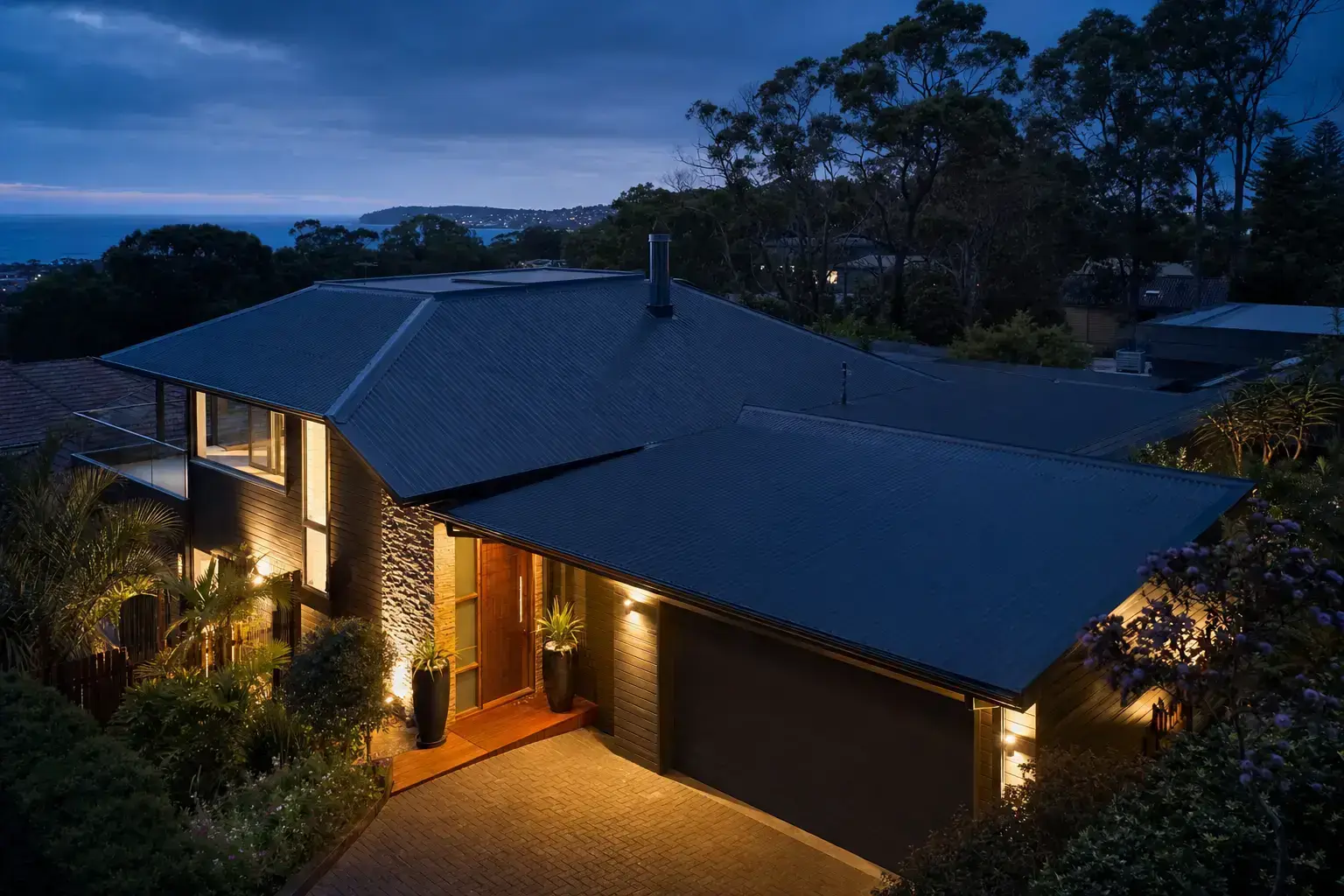
If you are set on a dark roof for the look, and plenty of people are, it is still a fine choice here. Just pair it with decent roof insulation or sarking underneath so the extra heat does not make its way into the living space. The dark colours that come up again and again on the Coast are Monument (a deep charcoal that reads almost black), Basalt (a softer near-black), Night Sky (the truest black) and Ironstone (a very dark blue-grey).
The most popular Colorbond roof colours around here
Trends move, but a handful of colours do the heavy lifting on Central Coast roofs, and for good reason. They are flexible, they age well, and they resell well.
- Monument. Easily the most requested. That deep charcoal gives a sharp, modern edge and works on everything from a rendered new build to a weatherboard cottage.
- Woodland Grey. A dark green-grey that is a little softer than Monument. It blends beautifully with bushland blocks around Kariong and the Rumbalara side of things.
- Windspray. A mid blue-grey that photographs well and suits homes near the water without shouting about it.
- Surfmist. The go-to when the brief is bright, coastal and cool.
- Wallaby. A warm mid-grey with a brown undertone that flatters brick and stone.
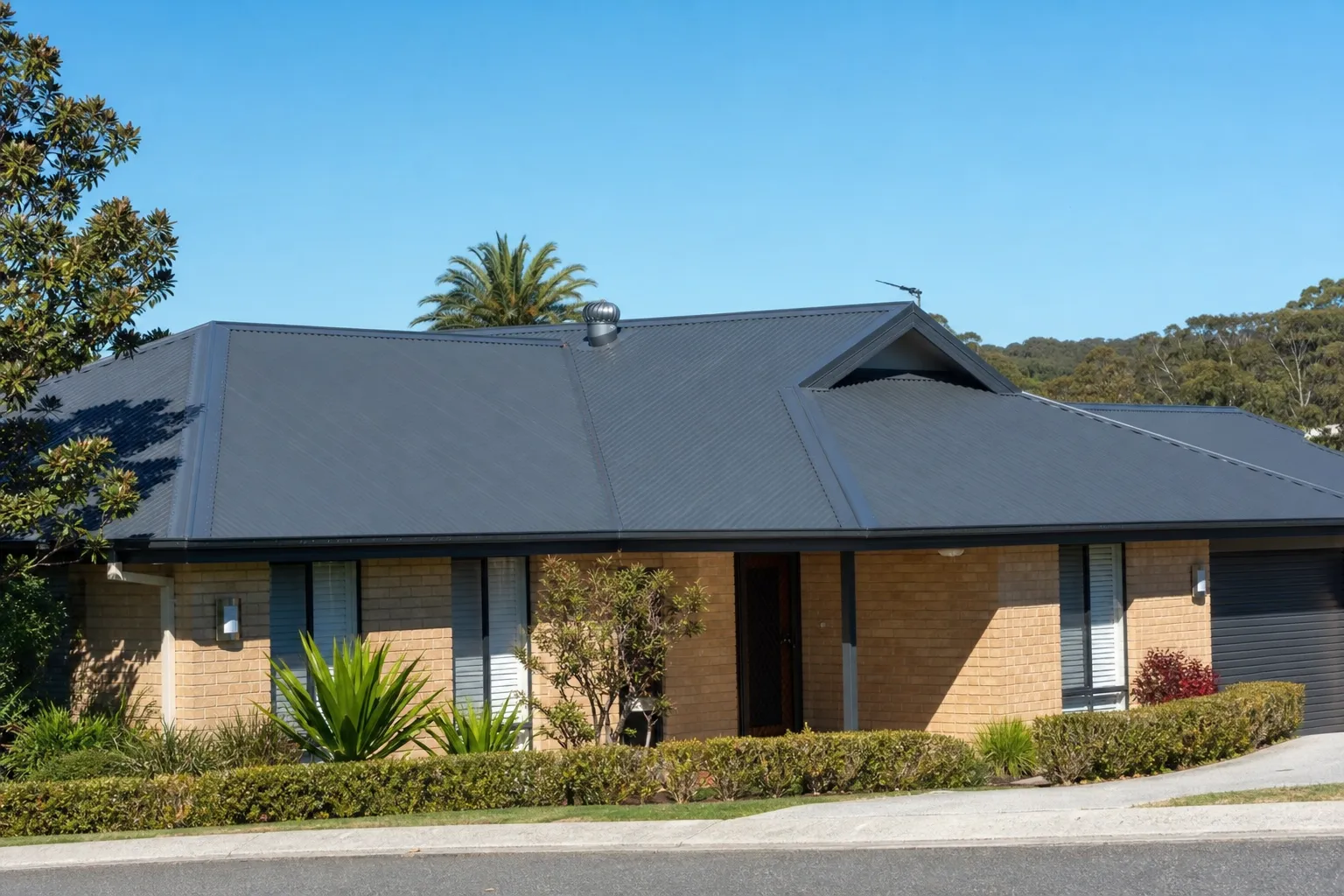
A mid-grey is the safe money if you are unsure or thinking about resale. It rarely dates, it hides the odd leaf and salt mark, and it gives you room to change wall and trim colours down the track without the roof suddenly clashing.
Matching the roof to the rest of the house
The mistake we see most is people choosing the roof colour on its own, in isolation from the walls, the gutters, the window frames and the front door. A roof that looks great on the chart can feel completely wrong once it is sitting above a face-brick wall it was never meant to go with.
A few things worth doing before you commit:
- Hold the sample against your actual walls and fascia, outside, in daylight. Colours shift a lot between a showroom and the real sun.
- Look at it at different times of day. Monument in flat morning light is a different animal to Monument at 4pm.
- Think about the gutters and fascia as part of the same picture. Matching or deliberately contrasting them changes the whole feel.
- Have a quiet look up and down your street. You do not need to copy the neighbours, but a roof that ignores the neighbourhood entirely can hurt you at sale time.
If your home is heritage-listed or in a conservation area, and parts of Gosford and the older beach suburbs are, check whether there are colour rules before you fall in love with anything. It is a five-minute phone call that saves a lot of heartache.
The coastal factor: salt, fading and Colorbond Ultra
Here is the part that gets skipped. If your home is close to breaking surf, and a good number of homes from Terrigal down to Umina are, the standard Colorbond product may not be the right grade. There is a tougher version, Colorbond Ultra, made specifically for severe marine and coastal environments where salt spray is relentless. It carries a heavier corrosion resistance for exactly those conditions.
As a rough guide, the closer you are to the water, the more it matters. Homes within a few hundred metres of the surf are the ones we most often steer towards the Ultra grade. It is not about the colour itself, the same colours are available, it is about what sits underneath the paint doing the protecting. When we quote a metal roof for a beachside home, this is one of the first things we work through. You can see how we approach full re-roofs on our Colorbond and metal roofing service, where the grade and colour get decided together rather than as an afterthought.
On fading: modern Colorbond finishes hold their colour far better than the painted metal roofs of twenty years ago. Darker colours can show wear a fraction sooner than pale ones simply because there is more pigment working harder, but with the current paint systems the difference over a roof's life is small. It is not a strong enough reason to talk yourself out of a dark roof you love.
Can you get a Colorbond colour without a new roof?
Sometimes. If your existing metal roof is sound but tired, or you have a tile roof you want to freshen up in a similar tone, a quality coating can give you a comparable colour for a fraction of the cost of replacement. It is not identical to a factory Colorbond finish, but on the right roof it looks sharp and buys you years. We cover the trade-offs, and what it costs, in our guide to roof painting on the Central Coast.
And if you are weighing up a full switch from old tiles to metal, colour is only one piece of that decision. Our rundown on a tile to metal roof conversion walks through what the change actually involves and whether it stacks up for your home.
A few common questions
Which Colorbond roof colour keeps a house coolest?
The pale colours, with Surfmist near the top. Anything in the off-white to light-grey band reflects the most heat. If you want a darker look but still care about heat, focus on insulation under the roof rather than fighting the colour.
Do dark roofs fade faster?
Only marginally with today's Colorbond paint systems. Dark colours carry more pigment so any change is easier to notice, but it is a slow, subtle shift, not the chalky fade people remember from older roofs.
What is the most popular colour on the Central Coast?
Monument, comfortably. Its deep charcoal suits almost every style of home, which is exactly why it is everywhere. Woodland Grey and Surfmist follow close behind depending on the look people are chasing.
How many colours are there to choose from?
The standard Colorbond range runs to more than twenty, from true black through the greys and greens to the pale coastal whites and creams. We bring the physical samples to you so you are choosing against your real walls, not a screen.
Take the guesswork out of it
Picking a roof colour should be one of the enjoyable parts of the job, not the stressful one. If you are planning a new Colorbond roof and going back and forth on the shade, let us bring the sample deck to your place, hold the colours up against your home, and talk through the right grade for where you live. Get in touch for a free, no-pressure chat about your metal roofing options and we will help you land on a colour you will still be happy with in twenty years.