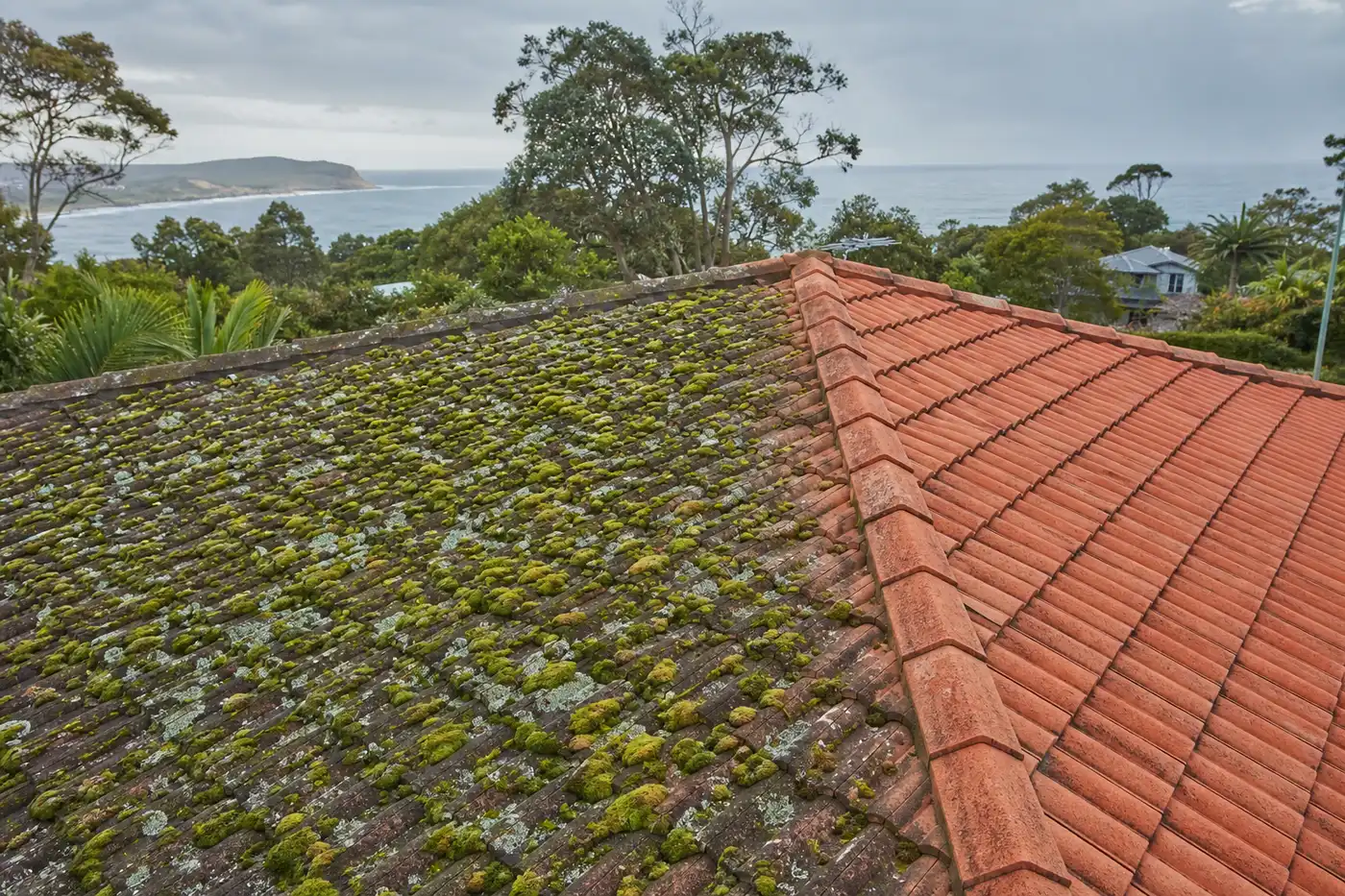
You back out of the driveway one morning, glance up, and notice one side of the roof has gone green. Maybe it started as a few dark streaks and now there are soft cushions of it sitting between the tiles. That is moss, usually with some grey, crusty lichen mixed in, and once you get moss on your roof it tends to spread across the shaded, south-facing side first. It is one of the most common things we get asked about across the Central Coast, and for good reason. Our climate is close to perfect for it.
That green fuzz is a plant, and it holds water
Moss, lichen and the darker algae streaks are all living growth, not just dirt that will hose off. Moss is the spongy green stuff. Lichen is the flatter, greyish or orange crust that clings on hard. Algae is the black or dark green staining that runs in lines down the tiles. They all feed on moisture and the fine grit that settles on a roof, and the important part is what moss does once it takes hold. It acts like a sponge, holding rainwater against the surface of your tiles long after the rest of the roof has dried out. A roof is designed to shed water fast. Anything that keeps it wet is working against it.
Why Central Coast roofs go green so fast
If your roof seems to grow moss quicker than a mate's place further inland, you are not imagining it. The Coast gives moss everything it wants. We get real humidity through summer, solid rain across autumn and winter, and a lot of homes tucked into leafy, shaded blocks around places like Woy Woy, Kincumber and the Gosford gullies. Add overhanging gum trees dropping leaf litter, and morning sea mist that takes its time burning off, and the shaded slopes of a roof can stay damp for hours. Tiled roofs are the most affected, because the slightly rough, porous surface of an older concrete or terracotta tile gives spores something to grip. The side that never sees much direct sun is almost always where it starts.
Moss does more than look bad
Plenty of people leave it, figuring a bit of green never hurt anyone. The problem is what happens underneath it. Because moss traps moisture against the tiles, it slowly breaks down the protective surface and speeds up the wear on the tile itself. Thick growth also creeps up under the overlaps and lifts the edges of tiles just enough to let wind-driven rain track in behind them. From there it is a short step to a damp roof cavity or a stain on the ceiling. When clumps of moss and leaf litter wash down into the valleys and gutters, they dam up the flow, water backs up under the tiles instead of draining away, and that is one of the quieter causes behind a roof that starts leaking after a big wet spell. A roof thick with wet moss is also carrying real extra weight, and it stays slippery and dangerous to walk on for days.
Lichen is the stubborn one
Moss will often lift off in sheets once it dies. Lichen is a different animal. It puts down tiny root-like threads that dig into the surface of a porous tile and hang on, which is why scrubbing at it tends to take the tile finish with it. This is also where the type of tile matters. An older concrete tile that has lost its coating is soft and absorbent, so lichen really gets its hooks in, while a glazed terracotta tile is smoother and fights it off a bit better. It is worth knowing which you have, because concrete and terracotta tiles behave differently as they age and when they are cleaned. Either way, lichen almost always needs a proper treatment rather than muscle.
Why blasting it off yourself usually backfires
The instinct is to grab a pressure washer, get up there on a dry Saturday and blow the lot off. I would gently talk you out of it. High-pressure water cracks and chips tiles, strips off what is left of the protective coating, and forces water straight up under the overlaps and into the roof cavity, which can leave you with a leak you did not have before. It also blasts the bedding and pointing out from around your ridge caps. On top of the damage, a mossy roof is genuinely slippery, and roof falls are the sort of accident that changes a life. Even where a bit of scrubbing does knock the surface growth off, it does nothing to the spores left behind, so it is usually green again within a season. Getting rid of it properly is less about force and more about the right treatment, which is the whole point of a professional roof clean on the Central Coast.
How the pros actually get rid of it
The method that works is not the most dramatic to watch. Rather than trying to blast living moss off in one go, we clear the loose surface growth, then apply a treatment that kills the moss, lichen and algae down to the spore. On tile we lean on soft washing, which uses low pressure and the right cleaning chemistry to do the work without wrecking the surface. The growth then dies off and weathers away over the following weeks, and a gentle wash lifts the rest. Once the roof is clean and dry, it is the ideal time to sort out anything the moss was hiding, like cracked tiles or tired pointing, and to talk about resealing or recoating a tired tile roof so the surface sheds water properly again. That last step is what actually slows the moss from coming back, and coating work we carry out is backed by up to a 15-year warranty (conditions apply).
Keeping it from coming straight back
You will not stop moss forever on a shaded Central Coast block, but you can make your roof a far less welcoming place for it. A few things genuinely help. Keep the gutters and valleys clear so the roof drains and dries quickly. Cut back overhanging branches so more sun and air reach the tiles. Have the roof treated and, where it is due, resealed with a quality coating, since a smooth, sound surface gives spores much less to grip. After that, a look over the roof every year or two catches new growth while it is still a light job rather than a heavy one. Compared with the cost of replacing tiles that have quietly rotted under a moss blanket, it is money well spent.
Book a roof clean before it digs in
If one side of your roof has turned green, or you can see grey lichen crusting the tiles, it is worth dealing with before it works its way under them. Get in touch with Roof Restorations & Replacements Central Coast (NSW Licence #203374C) for a safe, thorough roof cleaning and moss treatment that clears the growth and protects the tiles underneath, right across the Coast.