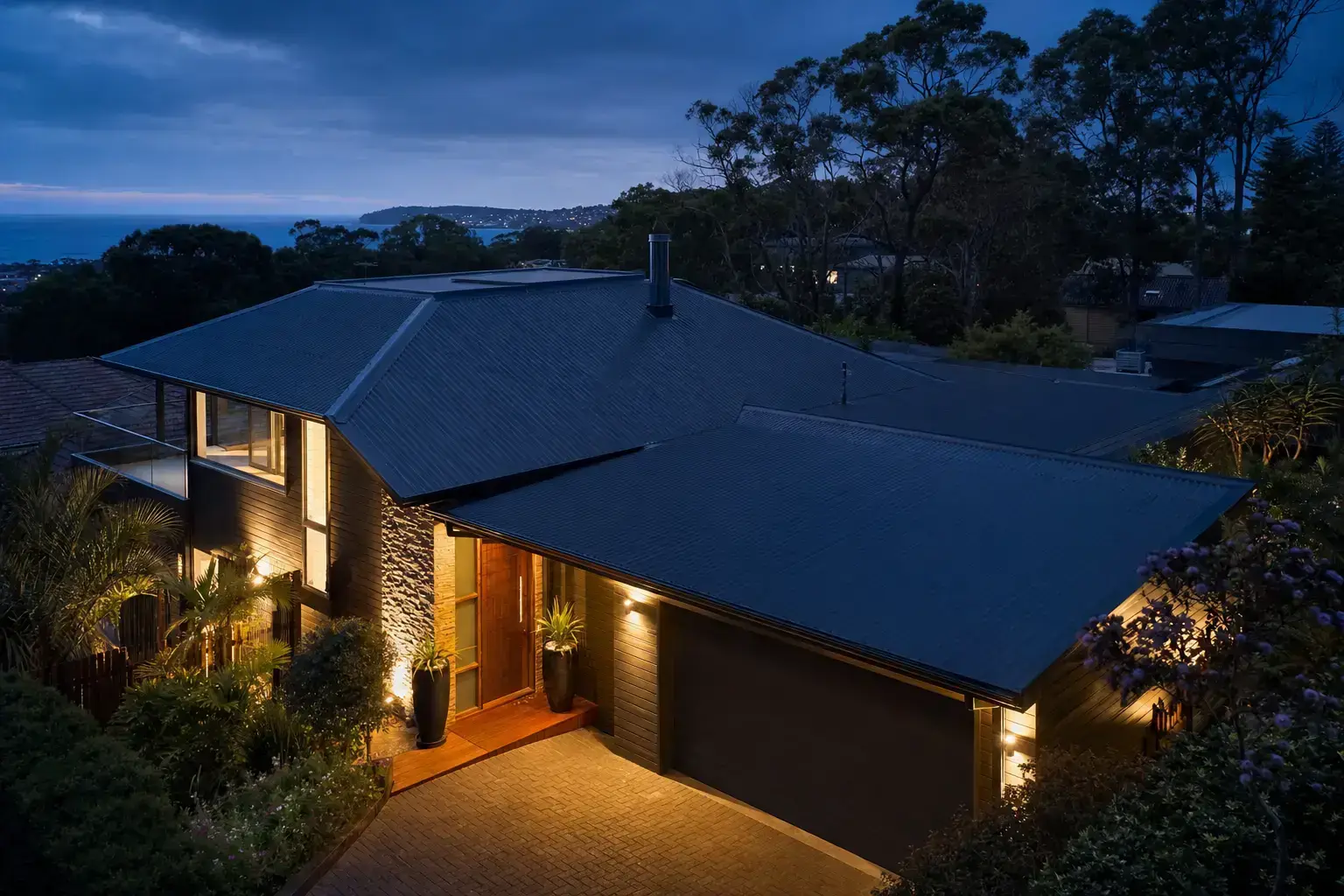
The building report has come back, the conveyancer is waiting, and there is one line you keep rereading: roof not fully accessible, inspected from ground level. It looks harmless. On an older Central Coast house it can be the most expensive sentence in the whole report. A pre-purchase roof inspection is how you find out what that line is hiding while you can still do something about it.
We do a steady run of these for buyers, from renovators taking on hill street houses in Gosford to young families buying beach cottages in Umina. Here is what the inspection covers, what we look for on Coast roofs in particular, and how buyers use the result.
A general building report often sees the roof from a distance
A building inspector has the whole house to get through: the structure, damp, wet areas, the subfloor. Plenty of them will not walk a roof that is steep, two storey, wet or fragile, and a good one will say so plainly in the report. That is fair enough. Roofing is not their trade.
The trouble is that the roof is the most expensive part of a house that building reports routinely under-examine. From the ground, a tired tile roof and a sound one can look much the same. Up close, the difference is obvious within half an hour.
And the difference is real money. On a 1970s Gosford hill street house with its original tiles, the gap between a roof that can be restored and one that needs replacing can be $15,000, and none of it shows from the street. Going by the 2026 figures in our cost guides, most full restorations on the Coast land between $4,000 and $12,000, while replacing the roof on a standard single storey home usually runs $12,000 to $30,000. If you are unsure which side of that line a roof sits on, our guide to choosing between restoring and replacing a roof explains how we make the call.
We walk the roof, not just photograph it
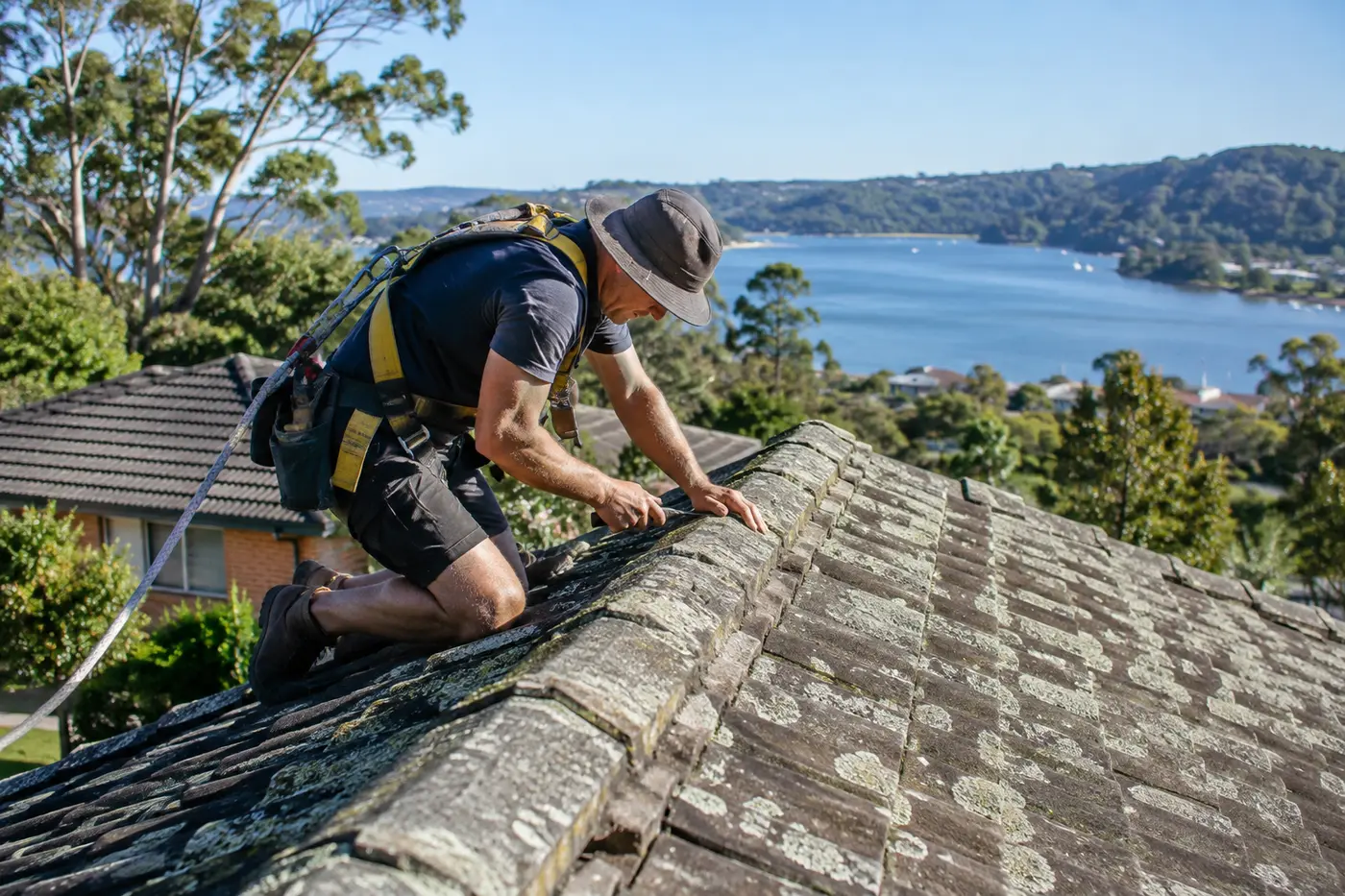
A proper inspection means a roofer on the roof, hands on the tiles, fixings and pointing. We use a drone only where access genuinely demands it, because most roof problems are felt and heard as much as seen. A loose tile rocks. A drummy one sounds hollow. On site it usually takes 30 to 60 minutes.
These are the areas we work through on every pre-purchase visit:
- Tiles or sheets: cracks, slipped tiles, porosity, rust, lifted edges
- Ridge capping: the condition of the bedding and pointing (the mortar that holds the caps along the ridges), plus any loose caps
- Valleys: rust, leaf dams, and iron that is aged or undersized
- Flashings and penetrations: lifted edges and failed seals around vents, skylights, chimneys and aerials
- Gutters and downpipes: rust, fall, blockages and the state of the fascia behind them
- Inside the roof space, where we can get in: daylight showing through, water stains on the timbers, and the condition of the sarking (the foil lining under the tiles)
We can also usually date a roof to within a few years from the tile profile, the fasteners and the material itself. That matters when a listing says "roof in good condition" and nothing more. More useful still is the number of years the roof has left, which is what you are really buying.
Coast roofs fail in a few predictable places
A roof in Kariong does not age like a roof two streets back from the surf. Knowing where to look on this part of the coast is half the value of the inspection.
Salt air. Near the beach, salt settles on metal and holds moisture against it. Original corrugated iron on the Peninsula often carries decades of patch history, and the rust under a fresh coat of paint does not show in listing photos.
Leaf litter in valleys. On the tree heavy hill streets around Gosford, leaves pile up in the valleys and rust them quietly from underneath. Nobody notices until a ceiling stain appears, usually after you have moved in.
Granny flat tie-ins. Where a new flat roof has been joined to an old cottage roof, the two structures move differently and the junction is a common leak point. We are called to fix failed tie-ins in Umina every month.
Old patch jobs. Silicone run over a cracked tile is a classic. It looks tidy for a season, then traps water under the tile. A roof covered in these tells you something about how it has been looked after.
The era of the house. The Central Coast grew fast from the 1940s through to the 1980s, and asbestos cement was the cheap, fireproof, everywhere material of that time. If you are looking at a home from those decades with a cement sheet roof, our guide to asbestos roofs on the Central Coast is worth reading before you sign anything.
Red flags you can spot at the open home
You do not need a ladder to get an early read, and you should not climb anything at an open home. From the street and the backyard, look for a ridge line that dips or waves instead of running straight. Look for orange rust streaks on metal, or dark water trails below the valleys. Cracked, slipped or missing tiles are often visible from the ground, and so is a green tinge on the southern face where moss has taken hold.
Two quieter clues are easy to miss. Stained or peeling paint on the eaves and fascia usually means gutters are overflowing somewhere. Coloured grit collecting at the bottom of the downpipes means the tile surface is breaking down. Inside, look up. A ceiling stain, or one freshly painted patch on an otherwise tired ceiling, is worth a question to the agent.
None of these tells you what the fix will cost. They tell you the roof needs a proper look before you commit.
The report is what you negotiate with
With our free roof inspections and photo reports, what you get is something you can act on, not a vague verdict. Every issue is photographed and labelled by roof area, along with the parts that are healthy. Each item gets a plain English call: fix now, plan for, or just watch. Anything worth doing comes with a written price, listed separately so you can see exactly where the money goes, and there is a view on what the roof will need over the next five years.
Buyers use that in a few ways. Some take the written prices back to the vendor and negotiate. Some ask for specific repairs before settlement. Some simply budget for a restoration in year two and buy with their eyes open. A few walk away, and that is a perfectly good outcome too. Conveyancers receive copies of our reports regularly, so talk to yours about how best to raise anything we find.
Just as often the answer is that the roof is fine. We say that a lot, and it is worth knowing.
Book it early, because the clock is short
In NSW the cooling-off period on a private sale is five business days, and there is none at all if you buy at auction. So for an auction, the roof needs to be checked before the hammer falls. We prioritise pre-purchase work, usually get there within days of your call, and deliver the photo report straight after the visit. You do not need to be there: we coordinate access with the selling agent and walk you through the findings by phone afterwards.
If you are planning to renovate, the same logic carries on after settlement. Get the roof verdict before the kitchen is designed, and get any roof work done before the plaster and paint. Money spent on a new interior under a failing roof gets spent twice.
Know the roof before you buy the house
If you are about to make an offer on a Central Coast home, call Roof Restorations & Replacements Central Coast on (02) 4326 0722 (NSW Licence #203374C), Monday to Saturday, 7am to 5pm. The inspection is free, with no obligation, and you can book a pre-purchase roof inspection online if that is easier.