The stain is in the corner of the lounge room, right below where two parts of the roof meet. It only shows after a proper downpour, and it looks a little bigger each time. When we get up on a roof like that, we usually find the same thing: a valley iron that has rusted through under years of leaf litter. Roof valley repair is one of the most common jobs we do on the Central Coast, and one of the most commonly botched.
Here is what a valley actually is, why they fail on Coast homes, what a proper fix looks like, and when a repair is honestly enough.
The valley carries more water than any other part of your roof
A roof valley is the inside corner where two roof slopes meet and angle inward, like the fold in an open book. Rain from both slopes runs into it, so in heavy rain the valley handles far more water than any single row of tiles.
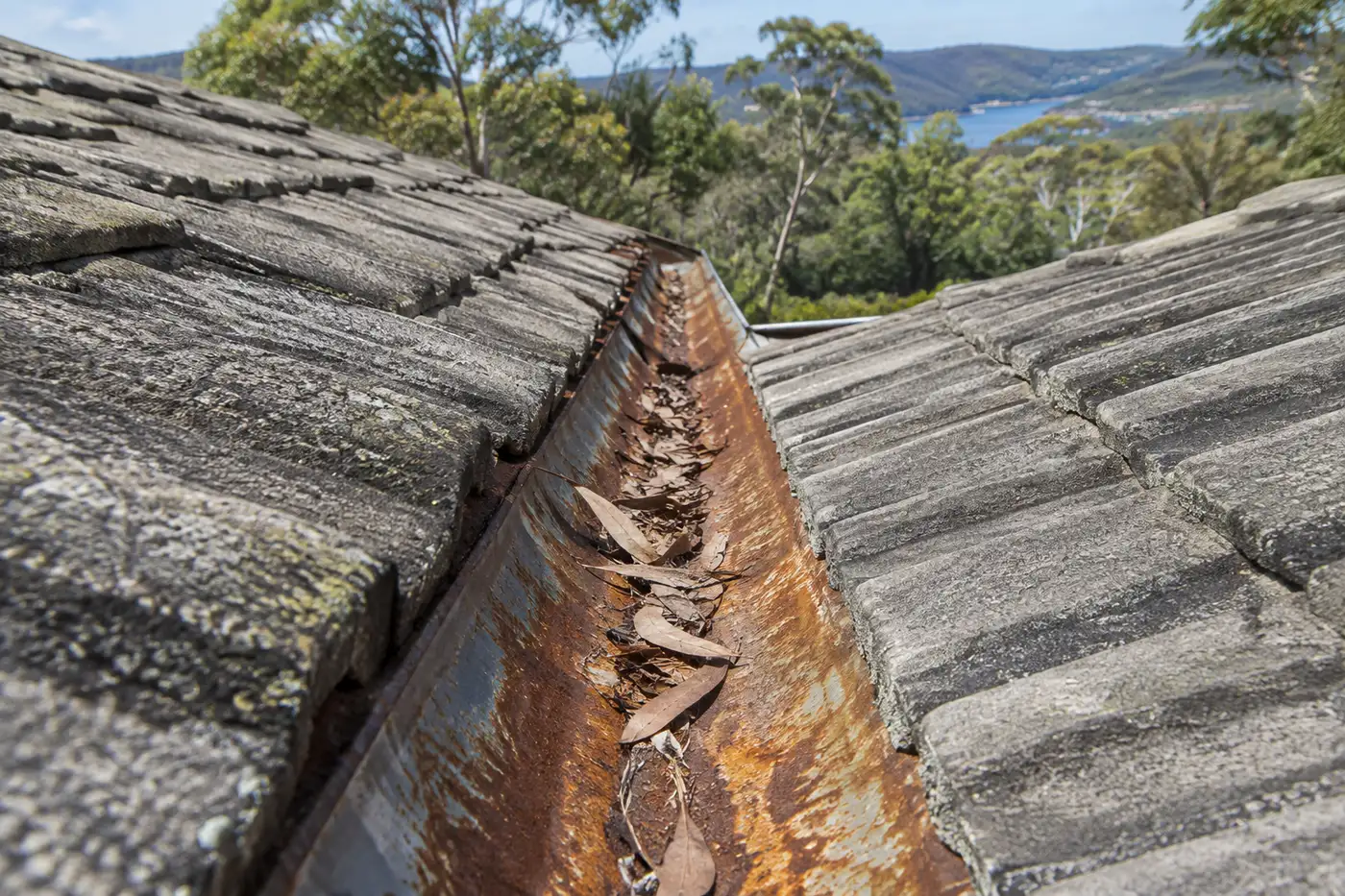
On most tiled homes here, that water runs down a strip of shaped steel called a valley iron. The name stuck from the days of galvanised iron. The tiles on each side are cut to follow the line of the valley and sit over its edges, leaving an open channel down the middle that drains into the gutter. Metal roofs have valleys too, formed with a valley gutter under the sheets. Same idea: one channel doing a lot of work.
Leaf litter and age are what rust them out
Valleys catch everything the roof sheds. Gum leaves, bark, seed pods and dust slide down both slopes and settle in the channel. That debris holds moisture against the steel long after the rain stops, and wet leaves sitting on metal are exactly how rust starts. Around Gosford we regularly find rusted valley irons hidden under decades of leaf litter, especially on the hill streets where big trees hang over older brick and tile homes.
Age does the rest. A lot of the tile roofs we work on across the Coast date from the 60s, 70s and 80s, and the valley irons are often the originals. Add salt air in the beachside suburbs and that steel has been under attack from two directions for a very long time.
Rust is not the only culprit, though. These are the other faults we trace valley leaks back to:
- Blocked channels. When leaves dam the valley, water backs up and spills sideways under the tiles instead of running to the gutter.
- Slipped or cracked cut tiles along the edge of the valley.
- Tired bedding and pointing. The mortar holding the cut tiles in place cracks with age and lets wind driven rain get past.
- Old repairs, usually cement or silicone smeared over a rusty patch.
You usually see the signs inside before outside
From the ground, a failing valley is hard to spot. Most people find out from inside: a stain or drip near an internal corner of the house, damp along the top of a wall below where two roof lines meet, or a leak that appears in heavy rain and vanishes in light showers. That last pattern is typical of valleys. A light shower never fills the channel. A downpour does.
Water also travels along the timbers before it shows, so the stain can sit a fair way from the valley itself. Our guide to working out where a roof leak is really coming from explains why the drip is so rarely under the fault.
If you can see a valley safely from a window or the yard, look for leaves sitting in the channel, orange or brown rust streaks, and moss growing along the cut tiles. Leave the closer look to someone with roof safety gear. Valleys often sit on a steep pitch, and the cut tiles beside them crack easily underfoot.
Repair or replace comes down to the steel
This is the question everyone asks. The honest answer depends on what we find once the debris is cleared away.
When a repair is enough
If the valley iron is still sound and the leak comes from a blockage, a slipped cut tile or cracked pointing along the edge, the fix is usually modest. We clear the channel, reset or replace the cut tiles, rebed and repoint them, and check that the valley drains cleanly into the gutter. Light surface rust on otherwise solid steel can sometimes be treated and coated. That buys time. It does not make old steel new.
When the valley iron needs replacing
Once the steel has rusted through, or is pitted and thin along its length, patching it is money wasted. A patch over one pinhole holds until the next one opens up beside it.
Replacement means lifting the cut tiles on both sides, removing the old valley iron and fitting a new one in modern coated steel. Then the tiles go back down and are rebedded and repointed so they sit firm. It is a contained job, and your existing tiles go back on your roof.
As a guide, our indicative range for valley iron replacement is $600 to $1,500. You will find it alongside other common fixes in our breakdown of roof leak repair prices on the Coast. The length of the valley, how high and steep the roof is, and how many valleys need doing all move the figure. Every job is quoted in writing after the inspection.
Cement in a valley is a warning sign
A good share of the valleys we replace have been fixed before. The usual culprit is a layer of cement or sealant spread over a rusty section. It can stop a drip for a season. Then it cracks, water gets underneath, and the patch holds that water hard against the steel. The rust speeds up out of sight, and by the time the leak comes back the valley is often too far gone to save.
If someone offers to seal a rusted valley rather than replace it, ask how long they expect it to last and whether they will put that in writing. No coating makes rusted through steel whole again.
A clear channel makes a new valley last
New valleys still need the leaves kept out. Where a house sits under big trees, we often fit valley guards: a mesh over the channel that stops leaves settling while letting water through. Having the gutters and valleys cleaned before the wetter months also goes a long way, and it is a job best done by someone harnessed on the roof, not from the top of a ladder.
If your roof is due for bigger work anyway, sort the valleys at the same time. Replacing rusted valley irons is a standard part of a full restoration, along with the clean, repairs, repointing and protective coating. Doing it once costs less than doing it twice.
What happens when you call us about a valley
We come out, look over the whole roof rather than just the valley, clear enough debris to see the condition of the steel, and photograph what we find so you can see it too. Then you get a plain explanation and a written price. If a repair will do the job properly, that is what we recommend. Our roof repair service on the Central Coast covers valley replacements, valley guards, and the bedding and pointing that goes with them.
If a stain in a corner grows after every heavy rain, get the valley above it checked before the steel gets any worse. Call Roof Restorations & Replacements Central Coast on (02) 4326 0722 (NSW Licence #203374C), Monday to Saturday 7:00am to 5:00pm, or book a free inspection through our roof repairs page.