The wind came through overnight. In the morning there is a ridge cap on the lawn, a couple of broken tiles in the gutter, and a damp patch on the hallway ceiling that was not there yesterday. That is how most of our calls for storm damage roof repairs on the Central Coast start, often from three or four streets at once.
The good news is that most storm damage is very fixable. What matters is the order you do things in: keep the water out first, get the damage recorded, then get a proper repair booked before the next front rolls in. Here is how that plays out, and what to look for from the safety of the ground.
Wind does more damage than the rain
People expect the rain to be the problem. Usually it is the wind. A strong southerly or a storm cell pushes air under the edges of a roof and lifts whatever is weakest.
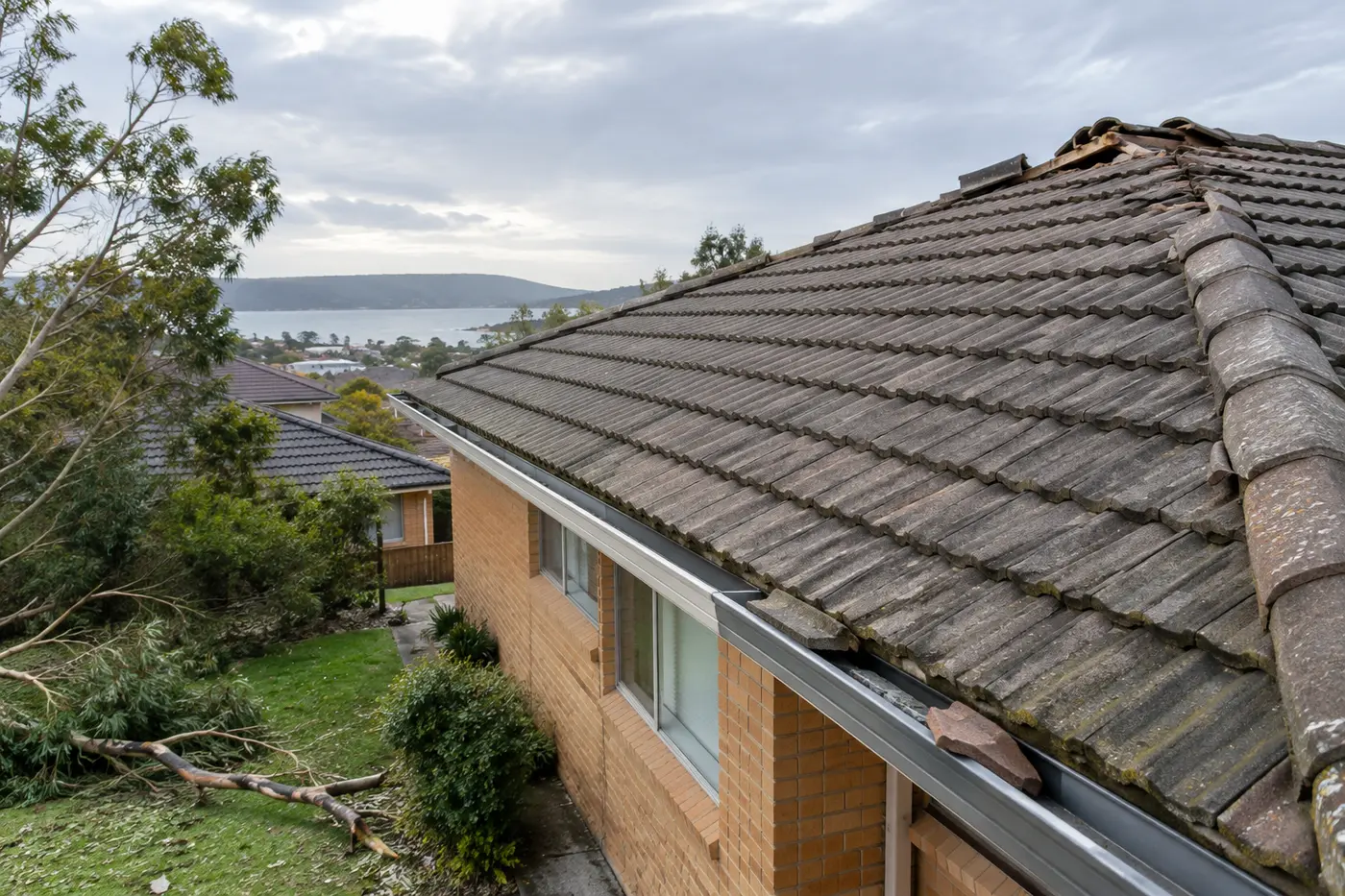
On tiled roofs that tends to be the ridge capping, the curved tiles along the top. They sit on a bed of mortar sealed with pointing (the flexible compound that seals and locks the caps in place). Once that bedding has aged and cracked, a hard gust can lift a cap clean off. Tiles along the edges and hips go next, then rain gets blown into the gaps.
Metal roofs fail differently. Sheets lift where fasteners have corroded or worked loose, and flashings peel back at the edges. Then there is the obvious one: a branch coming down through the roof, which no amount of maintenance prevents.
Hail is less common here but does real harm when it arrives. It cracks older concrete and terracotta tiles that have gone brittle, and it can dent metal sheeting and gutters.
Where you live on the Coast changes the picture. Homes on the Kariong ridge cop more wind than the valley suburbs below. The Entrance sits between ocean and lake with nothing to slow the wind down. Around Wyong, storm cells funnel along the river flats. Beachfront streets take the full force of anything coming off the Pacific.
What you can safely check from the ground
Please stay off the roof. Wet tiles are slippery, storm damaged ones can break underfoot, and falls are the biggest killer in our trade. You can learn a lot from the yard and from inside the house:
- Tiles or ridge caps on the ground, on a lower roof or in the gutter
- Gaps along the ridge line, or tiles sitting crooked
- Metal sheets lifted at the edges, or flashing flapping in the breeze
- Gutters pulled away from the fascia, or downpipes hanging loose
- Branches resting on the roof, even if they look small
- Inside: new ceiling stains, sagging plaster, or a damp smell from the manhole
Take photos of all of it as you go, on your phone, before anything gets moved or cleaned up. The timestamps help later.
The first few hours are about protecting the inside
If water is coming through, deal with the house first. Move furniture, electronics and anything precious out of the way, put down buckets and towels, and cover what cannot be shifted. Keep well clear of any light fittings with water near them, and get an electrician to check before you use them again.
If the roof has been opened up badly, say by a fallen tree, and you cannot get a roofer straight away, the NSW SES handles storm emergencies on 132 500. For everything short of that, call a licensed roofer.
Make-safe comes first, the proper repair second
After a big storm, a roofing job happens in two stages. The first is make-safe: tarps and temporary seals that stop the damage getting worse. The second is the permanent repair, done once the weather allows and, if you are claiming, once the insurer is on board.
We prioritise make-safe work after big weather, usually within 24 to 48 hours of a major cell. The permanent repair is quoted from the same visit, so you are not waiting on a second inspection. One honest tip: call early. Make-safe slots fill fast once a storm has moved through, because every roofer on the Coast gets the same phone calls on the same morning.
The permanent fix depends on what failed. It might be replacing broken tiles, rebedding and repointing a ridge line, refixing lifted sheets with new fasteners, or replacing a flashing. You can see the kind of storm and leak repair work we do across the Coast, from single tiles to whole ridge lines.
A tarp holds the line, it does not fix anything
A well fitted tarp buys time. That is all it does. Tarps flap in the next wind, sandbags shift, UV breaks the plastic down, and water can pool and find its way underneath. A tarp left on for months often causes damage of its own.
Treat make-safe as a holding pattern and get the real repair booked as soon as the weather opens up. If you are going through insurance, ask your insurer early how long they expect the claim to take, so the roof is not sitting under plastic through the next storm.
Storms find the roof that was already tired
This part can be hard to hear. When a storm strips half a ridge line, the wind is the trigger, but the cause is often mortar that had been cracking for years. A roof in good order tends to come through the same storm with very little damage.
That matters for two reasons. First, insurers draw a firm line between sudden storm damage and gradual wear. Our guide to how home insurance treats storm damage to a roof covers where that line sits and the report an assessor will want. We provide the photo documentation and itemised quotes insurers ask for. And do not accept a cash settlement figure before a roofer has actually been on the roof.
Second, if several caps let go at once, the rest of the bedding is probably near the same point. Patching the three that blew off leaves the other thirty waiting for the next storm. In that case we will show you the photos and explain the options plainly: a targeted repair, rebedding and repointing the full ridge, or a broader restoration if the whole roof is due.
Some storm damage only shows up weeks later
Not all damage is obvious the next morning. A cracked tile can sit quietly until the next heavy rain. A slipped tile might only leak when the wind comes from one direction. Water can also run along the battens and show up on a ceiling a metre or more from where it got in.
So if a new stain appears a few weeks after a storm, the storm is a likely suspect. If you are not sure, the usual reasons a roof starts leaking are worth a read. Our inspections are free, and one after any serious storm catches lifted caps and cracked tiles before the rain finds them.
Get the damage looked at while it is fresh
Storm damage is easier to repair, and easier to claim on, when it is found and recorded early. If the last storm has left you with missing tiles, a lifted sheet or a new stain on the ceiling, call Roof Restorations & Replacements Central Coast on (02) 4326 0722 (NSW Licence #203374C), Monday to Saturday, 7am to 5pm. Our Central Coast roof repairs team will make it safe, document the damage, and quote the permanent fix in writing. The work is backed by our 15-year warranty (conditions apply).